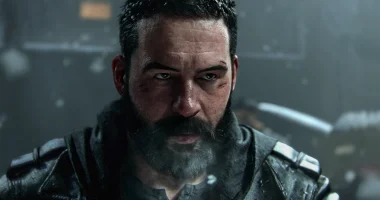
Booting up Fatal Fury: City of the Wolves for the first time was pure excitement. I grew up mashing buttons on a dusty Neo Geo cab while heading to a movie theater and seeing Rock Howard and Terry Bogard sharing the screen in a modern engine brought a smile to my face. The impression I get from SNK is that they’re putting down a serious foundation for something bigger. But even as I leaned into that nostalgia, one thing became clear: this game wants to set the table, not serve the whole meal just yet. City of the Wolves marks the first mainline Fatal Fury entry in 26 years, acting as a direct sequel to Garou: Mark of the Wolves and officially developed by KOF Studio under SNK’s banner. With a cast of 17 characters (some iconic, some new blood), crossplay support, rollback netcode, and a slew of innovative mechanics, this is a confident return for a beloved series. But rather than aiming for the kitchen sink approach of Street Fighter 6, SNK plays it safe here—delivering excellent fighting gameplay in a smaller, tighter package that feels more like a framework for what’s next.
The Glare of Fighting

This foundation-first approach is important to highlight. SNK isn’t trying to be everything all at once. Instead, they seem to be reintroducing Fatal Fury to the modern stage with mechanical confidence and competitive potential, hoping that the community will rally behind a gameplay-first experience. And for those of us who live and breathe combo optimization and frame traps—there’s plenty to love here. City of the Wolves enters as yet another stylized, cel-shaded aesthetic, and while it certainly pops with color and attitude, I have to admit—this didn’t always hit the mark for me. Some character models look too glossy or washed out under certain lighting conditions, and while I respect the boldness of the art direction, I found myself wishing for just a bit more detail or grit. That said, the stage design is strong, it feels alive and true to the franchise’s gritty South Town roots. A surprise favorite of mine was any stage that featured the lane-swap mechanic, a new twist that lets fighters shift positions in the foreground and background mid-fight. There are several modes to tackle:
- Arcade Mode, where the narrative plays out in traditional fighter fashion.
- Episodes of South Town (EOST), a solo mode with light RPG elements.
- Online Multiplayer, featuring rollback netcode and a cool new “Clone” system that mimics your playstyle for AI training.

I spent more time trying to decode the rhythm of its gameplay than getting into the story. After the highly interactive World Tour Mode from Street Fighter 6, City of the Wolves’ barebones storytelling feels like a missed opportunity. Characters have motivation and lore, but you’re fed most of it through static text and brief stills rather than engagement. I wanted to care more. I wanted to feel the legacy of South Town bubbling under every punch. But the story mode kept me at arm’s length. It didn’t pull me in—it gave me homework. And as much as I appreciate the nods to SNK history, I was constantly pulled back into training mode or online lobbies just to get the real joy out of the game: the combat.
The Cycle of Violence
The REV System is lovely – REV Arts, REV Accel, and REV Blow, this new meter-focused suite of options turns every match into a tightrope of risk and reward. It rewards aggression but punishes recklessness, especially when the REV Meter overheats. Overheat penalties prevent spam and reward smart pacing. Just Defense and Hyper Defense return, now paired with Guard Cancels that let you launch into REV abilities on the fly. S.P.G. (Selective Potential Gear) is brilliant—you choose where on your health bar your power spike happens. Want to go all-in at the start? Middle? Last breath? It’s your call. Feinting and Braking offer depth for lab monsters looking to optimize frame traps and baiting. Wild Punish introduces stylish, situational knockbacks that reward precise spacing and timing.

Even after 30 hours of play, I still felt like I was unlocking new layers of nuance in the combat – I am by any means a master at this game, but I’m gradually learning the flow of things; you’ll see when I live stream. The faint-focused fighting cadence encourages mind games, bait-outs, and creativity over rote memorization. The Clone AI System deserves a shout too. It mimics how you play and creates training dummies based on real player behavior. It’s like sparring with the ghost of your rivals or even your past self—which is both eerie and extremely cool. But again, the lane swap mechanic stood out for me. It’s not game-breaking, but it injects just enough chaos and positional awareness into some matches to make them feel special. Of course, there are a few characters to play with, but less than I anticipated:
- Rock Howard
- Terry Bogard
- Hotaru Futaba
- Tizoc
- Preecha
- Marco Rodrigues
- Vox Reaper
- Mai Shiranui
- Kevin Rian
- Billy Kane
- B. Jenet
- Gato
- Kim Dong Hwan
- Kain R. Heinlein
- Cristiano Ronaldo
- Salvatore Ganacci
- Hokutomaru
As much as I admire what SNK is trying to build here, two things stuck out for me, I’m not fully sold on the cel-shading art style. It has its moments, but I felt disconnected from the visual tone at times. It feels like it wants to be both gritty and cartoony, and ends up in a bit of a visual identity crisis. The story mode left me wanting. Not just in terms of content, but how it delivers it. After the more immersive, character-driven presentation of other recent fighters, City of the Wolves feels too surface-level in this regard. It’s more of a lore dump than an experience. Honestly, I wish I could’ve just enjoyed the story mode instead of spending most of my time trying to understand it.
REVIEW SCORE: 8/10
Despite its shortcomings, I walked away impressed. The Fatal Fury franchise is back with a bold new identity, and it’s clear SNK is focused on building a strong, competitive, and mechanical foundation before piling on more content. I respect that. The lane swap mechanic, REV System, and faint-focused combat cadence all show that this isn’t just a nostalgia project—it’s a game with new ideas. If you come in expecting a complete package like SF6, you might feel shortchanged. But if you’re here for meaty mechanics, innovation, and a promising future, this one delivers.
For more on Fatal Fury and more, follow my socials here – I also stream every night at 10pm ET over on Twitch, Tiktok and Youtube.