Assassin’s Creed IV: Black Flag has always been one of the more interesting entries in the franchise for me. When it originally launched back in 2013, I started my adventure on PlayStation 3 before moving over to the PlayStation 4 version through Ubisoft’s free upgrade program. Like nearly every Assassin’s Creed release at the time, I rolled credits, explored a healthy portion of what the Caribbean had to offer, and moved on to the next adventure. Unlike most of the mainline entries, however, Black Flag became one of the few Assassin’s Creed games where I never earned the Platinum Trophy. Looking back, that’s surprising considering I’ve gone on to Platinum nearly every major release up until beginning with Unity. More importantly, I never found myself returning to Edward Kenway’s adventure. Nearly thirteen years passed before I stepped aboard the Jackdaw again.
Time has a way of changing your perspective. I remembered Edward, Blackbeard, naval combat, and a handful of major story beats, but much of the journey itself had faded from memory. Entire missions felt unfamiliar, conversations landed differently, and there were multiple moments where I genuinely questioned whether I had remembered the original correctly. My excitement for Assassin’s Creed Black Flag Resynced wasn’t driven by nostalgia for pirates either. Pirate fiction has never been a genre I naturally gravitate toward. What has always fascinated me about Assassin’s Creed is the larger mythology surrounding the Isu civilization, Pieces of Eden, and the ongoing conflict between Assassins and Templars. The announcement of a complete ground-up remake built on Ubisoft’s latest Anvil Engine immediately had my attention because I’m a huge believer in projects like Resident Evil 4 Remake, Silent Hill 2, The Last of Us Part I, and the upcoming Metal Gear Solid Delta. Black Flag always felt like one of Ubisoft’s strongest foundations, and I wanted to see what modern technology could do for it.
After spending the past several weeks playing Assassin’s Creed Black Flag Resynced on both PlayStation 5 Pro and PC through Ubisoft Connect using cross-progression, I came away with a much deeper appreciation for Edward Kenway’s story than I ever expected. Out of curiosity, I even went back and watched footage from the original release, and that’s when everything clicked. Ubisoft hadn’t dramatically rewritten Black Flag. The original structure remains remarkably faithful. What changed was everything surrounding it. Modern rendering technology, rebuilt assets, denser environments, revised gameplay systems, expanded content, and one of the most impressive overhauls the Anvil Engine has ever received transformed an adventure I simply enjoyed back in 2013 into one I genuinely loved in 2026.
Edward’s Legacy Revisited
One of the biggest surprises throughout my playthrough was how differently Edward Kenway’s journey resonated with me after more than a decade. During my original experience, I viewed Black Flag primarily as another chapter in Assassin’s Creed’s larger mythology. I wanted more First Civilization lore, more Pieces of Eden, and more answers surrounding the modern-day storyline. Edward himself often felt like the vehicle taking me toward those discoveries rather than the primary reason I was playing. Coming back after thirteen years without those expectations completely changed how I experienced his story. His gradual evolution from a self-serving pirate chasing fortune into someone forced to confront responsibility, friendship, and sacrifice became far more impactful than I remembered. Whether that’s simply maturity on my part or the improvements Ubisoft has made to the presentation, I found myself invested in Edward as a character in ways I wasn’t during my original playthrough.
Ubisoft deserves a great deal of credit for showing restraint. Rather than rewriting one of the franchise’s most celebrated stories, Resynced preserves its identity while expanding the world around it. The remake introduces optional Animus Rifts that replace much of the original modern-day framework, additional side content, recruitable naval officers, expanded post-game missions, and new narrative opportunities that naturally complement the original campaign instead of replacing it.
None of these additions feel like they exist simply because a remake needed new bullet points on the back of the box. They respect what Black Flag accomplished while providing returning players with meaningful reasons to continue exploring once the original story concludes. What impressed me most wasn’t necessarily the new content itself. It was finally understanding why Edward Kenway continues to rank among so many fans’ favorite protagonists. I appreciated his journey back in 2013, but I don’t think I truly connected with it. Resynced gave me that opportunity, and by the time the credits rolled, I found myself enjoying his adventure far more than I ever had during my original playthrough.
Anvil Overhauls
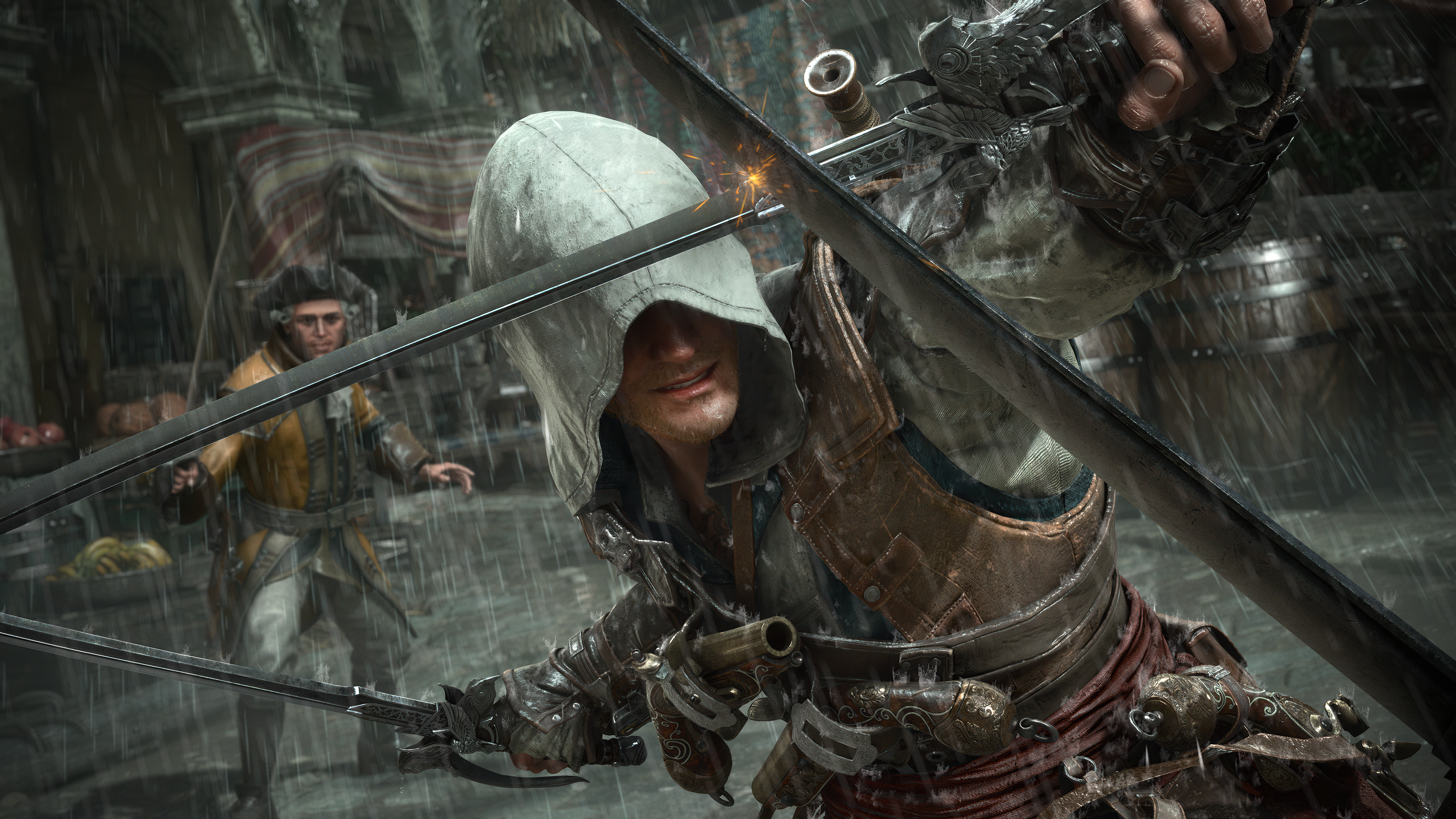
Without question, the presentation is the reason Assassin’s Creed Black Flag Resynced exists. If Ubisoft had simply increased the resolution and added higher quality textures, I don’t think returning to the Caribbean would have felt nearly as special. Instead, Ubisoft Singapore rebuilt virtually every aspect of the world using the latest version of the Anvil Engine, the same technology introduced with Assassin’s Creed Shadows. Complete asset reconstruction, Micropolygon geometry, destructible objects, significantly increased environmental density, modern material rendering, improved animation systems, ray-traced lighting, and expanded environmental detail immediately separate Resynced from the original release. Familiar cities like Havana, Nassau, and Kingston retain their layouts, yet everything feels richer because Ubisoft finally had the hardware capable of realizing those environments the way they were always meant to look.
I spent the majority of my review on PlayStation 5 Pro using Balanced Mode with the new 40 FPS presentation alongside Enhanced Ray Tracing enabled, and I genuinely believe it’s the sweet spot for this game. The additional GPU headroom allows the console to present dramatically improved image quality while maintaining a responsive feel during exploration and combat. Enhanced Ray Tracing isn’t limited to isolated showcase moments either. Global illumination changes how sunlight naturally fills jungles, caves, settlements, and interiors, while ray-traced reflections add believable depth across water, polished surfaces, windows, and countless environmental materials. Combined with dramatically improved foliage density, atmospheric effects, weather, volumetric clouds, wildlife, and environmental audio, the Caribbean feels alive in ways I simply don’t remember from the original release.
Micropolygon rendering quietly became one of my favorite additions because of how consistently it enhances every environment. Rock formations, cliff faces, rooftops, architecture, docks, vegetation, and ancient ruins all carry substantially greater physical detail than before. Pair that with rebuilt textures, improved shadow quality, smoother animation blending, updated facial performances, and destructible environmental elements, and it’s easy to lose yourself simply wandering through locations you’ve already visited years ago. I found myself slowing down far more often than I normally would during a review, climbing rooftops to admire city skylines, watching sunlight move across dense jungles, or simply standing on the deck of the Jackdaw taking in the atmosphere. Because I was also reviewing the game on PC through Ubisoft Connect, cross-progression made it incredibly easy to continue exploring regardless of platform, and the transition between systems remained seamless throughout my time with the game.
Some Gameplay Misses
Ubisoft’s work extends well beyond the visual presentation. Traversal immediately feels smoother thanks to improved animation blending and the welcome return of mechanics like back ejects and side ejects, giving parkour far more freedom than I remembered from the original release. Climbing feels more fluid, movement chains together naturally, and navigating cities becomes enjoyable enough that I frequently ignored the fastest route simply because free running felt satisfying again. Combat also benefits from numerous refinements, with cleaner animations, improved responsiveness, stronger enemy reactions, and more impactful environmental interaction helping encounters feel considerably more polished than their 2013 counterparts. Naval gameplay remains one of the strongest aspects of Black Flag, and commanding the Jackdaw still delivers the same satisfying balance of ship combat, boarding actions, and exploration that made the original such a standout.
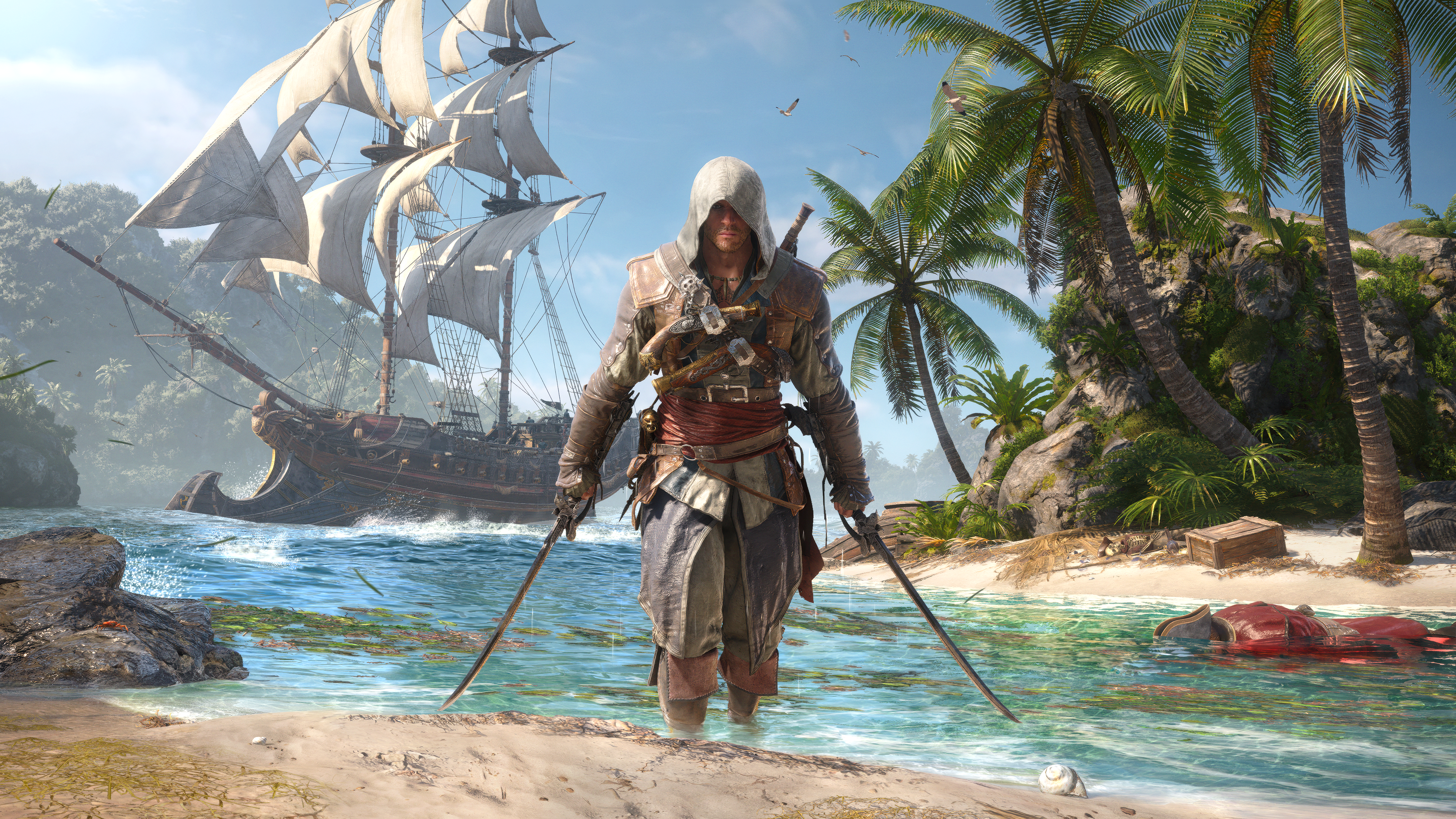
At the same time, this is where the remake occasionally reminds you of its origins, for the most part at least. Mission design isn’t always consistent, alternating between memorable set pieces and objectives that feel noticeably dated by today’s standards. Sailing remains enjoyable throughout much of the adventure, but repeatedly traveling across open water toward newly discovered locations gradually becomes repetitive, even with fast travel available elsewhere on the map. Resource gathering presents a similar issue. Upgrading the Jackdaw remains rewarding, yet the amount of naval combat required to continually gather materials eventually becomes more of a chore than an exciting gameplay loop. Combat, while significantly smoother than before, also reveals some of the limitations of the original design. Finishers begin repeating, combo variety remains fairly limited, and after spending the last several years with Origins, Odyssey, Valhalla, Mirage, and Shadows, I couldn’t help but appreciate how much Ubisoft has evolved the series’ combat philosophy over time. And I wouldn’t be a fan if I didn’t acknowledge some of the missing elements of the original, like Dual Hidden Blade combat and temporary ranged weapon pickups. Not having these feels like a missed opportunity for varied gameplay options and I hope it’s added into a future patch to please all returning players.
None of those issues overshadow what Ubisoft has accomplished with Resynced, but they do keep the experience grounded. This is still fundamentally Black Flag beneath one of the most impressive technical overhauls the franchise has received. Ubisoft modernized the systems without replacing their identity, and I think that was ultimately the right decision. Returning fans receive the adventure they remember, while newcomers experience the definitive version of one of Assassin’s Creed’s most celebrated entries.
REVIEW SCORE: 8.5/10
Assassin’s Creed Black Flag Resynced succeeds because it understands exactly what needed to change and, just as importantly, what needed to stay the same. The latest Anvil Engine transforms nearly every corner of the Caribbean through Micropolygon rendering, dramatically increased world density, Enhanced Ray Tracing, rebuilt assets, refined traversal, expanded gameplay systems, and meaningful new content, all while remaining remarkably faithful to Edward Kenway’s original journey. Some aspects of the mission structure, naval progression, and combat still reveal their age, but they do little to diminish what has become the definitive way to experience Black Flag. More than anything, Resynced gave me a chance to rediscover an adventure I hadn’t visited in nearly thirteen years, and I came away appreciating it far more than I ever expected.
For more on Black Flag Resynced and gaming, follow my socials here – I also stream Mon-Sat @9pm ET over on Twitch, TikTok, and YouTube