
Reviewed the expansion in a private server.
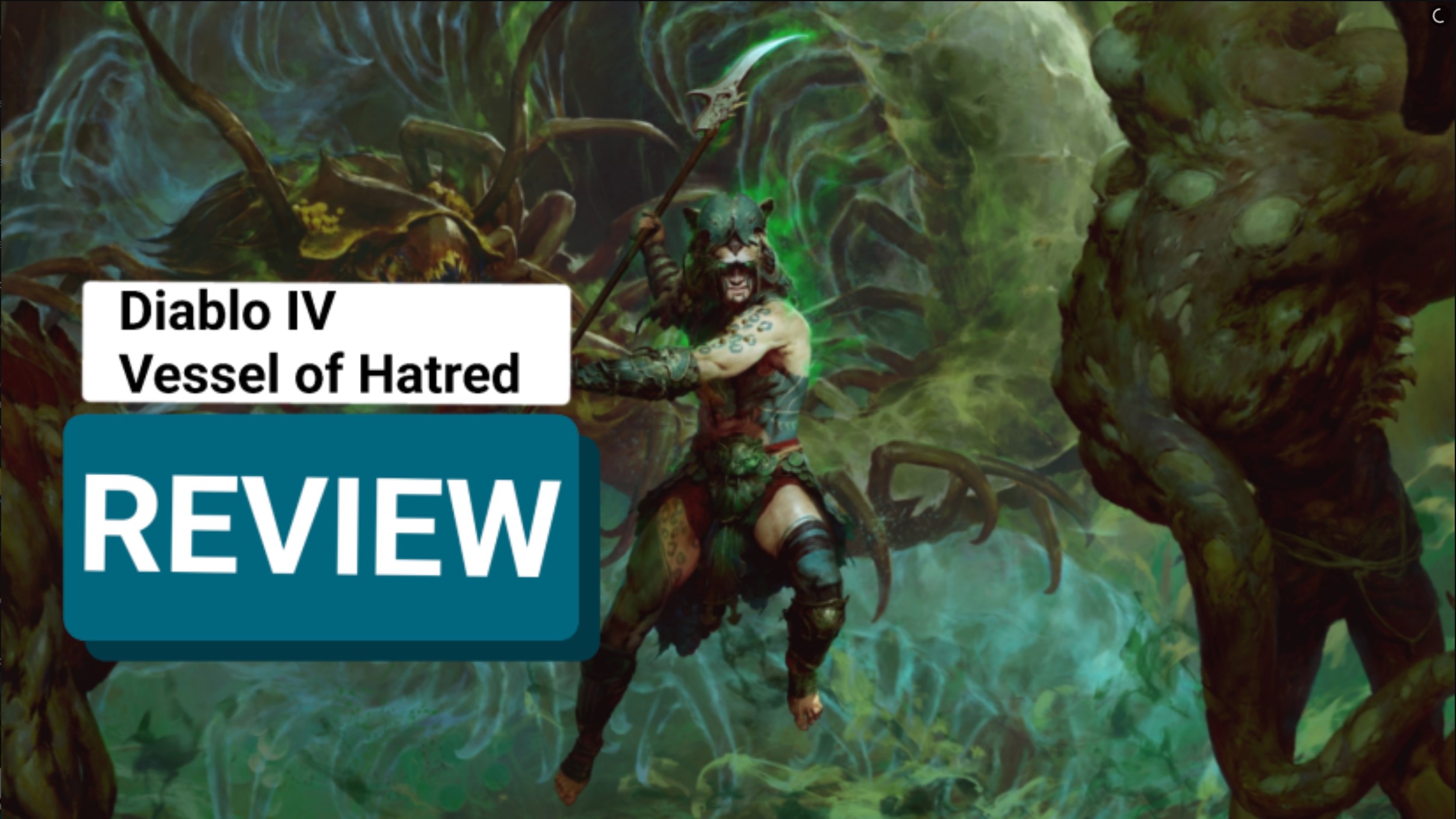
Blizzard has returned with Diablo IV’s first expansion: Vessel of Hatred. In many ways, the expansion manages to retain the game’s signature dark, immersive world, while sharpening the experience with new content and mechanics. Even though it’s only a single act, Vessel of Hatred never skimps on scale and complexity. I reviewed Vessel of Hatred in a private server during its beta phase, and despite it being an early build, there were minimal visual glitches and no game-breaking bugs—aside from a mount issue that was rectified through a workaround by purchasing a Jaguar available in the new region. I poured about 200hrs into my Sorcerer, and since then there has been some major changes I needed to reacclimate to – so it was only natural to dive in using the Spiritborn class, and while I scoured Nahantu like a mad man, I was met with interesting new gameplay features that surprised me – after 12hrs of slaying demons in the campaign and several more in edngame, I was left yearning for more.
More Scenes, More Immersion
Much of the expansion unfolds in Nahantu, one of the most visually captivating zones introduced to the Diablo universe – some aspects are returning areas from Diablo 2 which I suspect fans would immediately catch. This jungle region, which connects well into the southwest portion of Sanctuary, is a breathtaking mix of ancient civilizations and dense wilderness, blending the oppressive feel of the city of Kurast with a touch of vibrant overgrowth. It’s a world shrouded in mysteries, with its own dungeons and strongholds that fit perfectly into the hellish lore of Diablo. You will find yourself jaunting through new tendril-like demon structures that’s supposed to be seeping from Mephisto’s World Stone. Its fantastically detailed and designed with thoughtful thematic approach that doesn’t take away from the dark fantasy world Blizzard is creating. However, despite how gorgeous Nahantu is, I found myself slightly underwhelmed – without giving anything away, there are elements absent here that I would like to have seen return. I’m left optimistic based on the final cutscene, but I kind of want it now. The assets used for its demonic structures felt too familiar, seemingly recycled from Hell in the base game. For an expansion set in such a visually distinct region, I had hoped for more otherworldly locations, especially after the events of the base game. I’m assuming this story is going to continue in coming expansions, so again I’m optimistic.
One of the first things that stood out in Vessel of Hatred was the presence of animated cutscenes – perhaps I should have expected this given the $50 price tag, but it’s still nice to know that the team is not skimping on production efforts. These cinematic sequences are peppered throughout Act VII offering emotional depth and enhancing the narrative drive. The pacing is surprisingly on point, each section builds up tension until the final quest which, without giving too much away, offers a satisfying bridge to what’s to come. However, the story does feel a bit too centered on a specific narrative arc, which unfortunately limits the world-building potential that many players (myself included) expect from a Diablo expansion. Yes, there’s branching that promises something bigger, but as it stands, I left wanting more context from the implications that’s set for me.
The Beast and the Horde
As I mentioned earlier, my campaign run in Vessel of Hatred was as a Level 1 Spiritborn, and I’m confident this could quickly become a fan-favorite class. There is clear inspiration from the Monk in Diablo III but flared with other aspects similar to the Crusader as well – the class feels like it’s been upgraded, a more agile sibling—fast, fluid, and aggressive. The acrobatic, martial-arts-based playstyle feels heavy and impactful which is what I love, and the Spirit Hall mechanic adds layers of depth to how you approach combat. With the ability to mix two of four spirits—Jaguar, Gorilla, Eagle, and Centipede—the hybrid builds let you experiment with battle synergy. For me, the Jaguar Spirit paired with Eagle for valor management kept things exciting, as I leaped across battlefields, chaining refreshing skill combos that felt rewarding every time. But even with all of that, you will be tested – maybe the reason is because I was in a private server reviewing this expansion, and I was getting abolished by the new threat because I was lacking the renown skill points for the advantage, I don’t know, all I know is I was facing death often – especially with the addition of 4 difficulties before jumping into Torment 1.

But the biggest addition in Vessel of Hatred? The Runewords system. Anyone who’s spent time with Diablo II will feel a sense of nostalgia, but don’t expect a carbon copy of that classic system. While in Diablo II, runes could drastically alter playstyles and even craft new gear (remember the iconic Enigma Runeword?), here in Diablo IV, the devs took a more measured approach. The design philosophy of these runes appears to avoid making Runewords the always go-to “Best in Slot” items. The focus to enhance build diversity rather than limiting it otherwise seems like the smarter choice for a live-service Diablo game (but one I suspect isn’t going to stop people from making one shot meta builds). The idea of adding layers to your strategy without overhauling what makes your class tick is a good one and only time will tell whether or not this will flourish in an ever-expanding environment. You won’t be forced to sacrifice your best gear for the sake of a Runeword; there’s now a crafting mechanic that lets you forge Mythic Uniques by combining sets of runes. This feels like a callback to Diablo II, where each rune found brings you a step closer to unlocking an incredibly powerful item. It’s incremental progress in the best way, offering that same rush of excitement you get when piecing together something rare and powerful.
In many ways, this system fits Diablo IV’s broader design—rewarding thoughtful experimentation while allowing players to chase incremental power boosts. I hadn’t had that much time to really sink my teeth in – but the potential appears to be even bigger than whatever was left behind Season 5.
The Dark Citadel & Kurast Undercity: New Challenges Await
One of the most pleasant surprises in Vessel of Hatred is the introduction of Mercenaries. Now, these aren’t your run-of-the-mill companions—they’re deeply integrated into the gameplay loop. Each mercenary you gather comes with their own backstory, unique skills, and the potential to build rapport, which unlocks further rewards. Teaming up with Raheir, the Shieldbearer or Subo, the Bounty Hunter, offers a fresh and tangible dynamic to combat in any given instance. I especially loved how engaging the mercenary acquisition quests were. They are relatively simplistic in design, but with the level of work in production amps the overall weight of these quest and made me feel a bit more connected than any NPC I have encountered in the base game.
Blizzard didn’t just stop at story and class improvements. They’ve also added new endgame content like the Dark Citadel and the Kurast Undercity. These dungeons are well designed and demands coordination for multiplayer teams. The Dark Citadel, in particular, was one of my favorite additions. With time-attack mechanics and split-force strategies, it kept me engaged. With the addition of Party Finder feature, you can now find other members much more efficiently, which is a huge plus for solo players looking to tackle tougher content – no, unfortunately you will not be able to bring in your AI companion if you want to tackle these endgame content solo – one can hope that it will be implemented in time. I didn’t get to dive too deep into this feature, but I can already tell it’s going to be a favorite among those who enjoy Diablo’s multiplayer elements.

REVIEW SCORE 8.5/10
Vessel of Hatred is a great first expansion for the ever-growing Diablo IV game, making tangible changes and adding fun endgame loop to the overall package. Even though I only had a set amount of time to play this, I can smell something cooking here. There are still mountains of loot and dozens of builds to work on when the game becomes available to all – and despite some gripes with the story being too center focused and Nahantu’s beautifully designed region hampered by a lack of a truly unique otherworldly presence, this expansion offers so much more than one would think – and I want more.
See you all come Oct 8th! For more on Diablo IV and gaming, follow me on all my socials here

