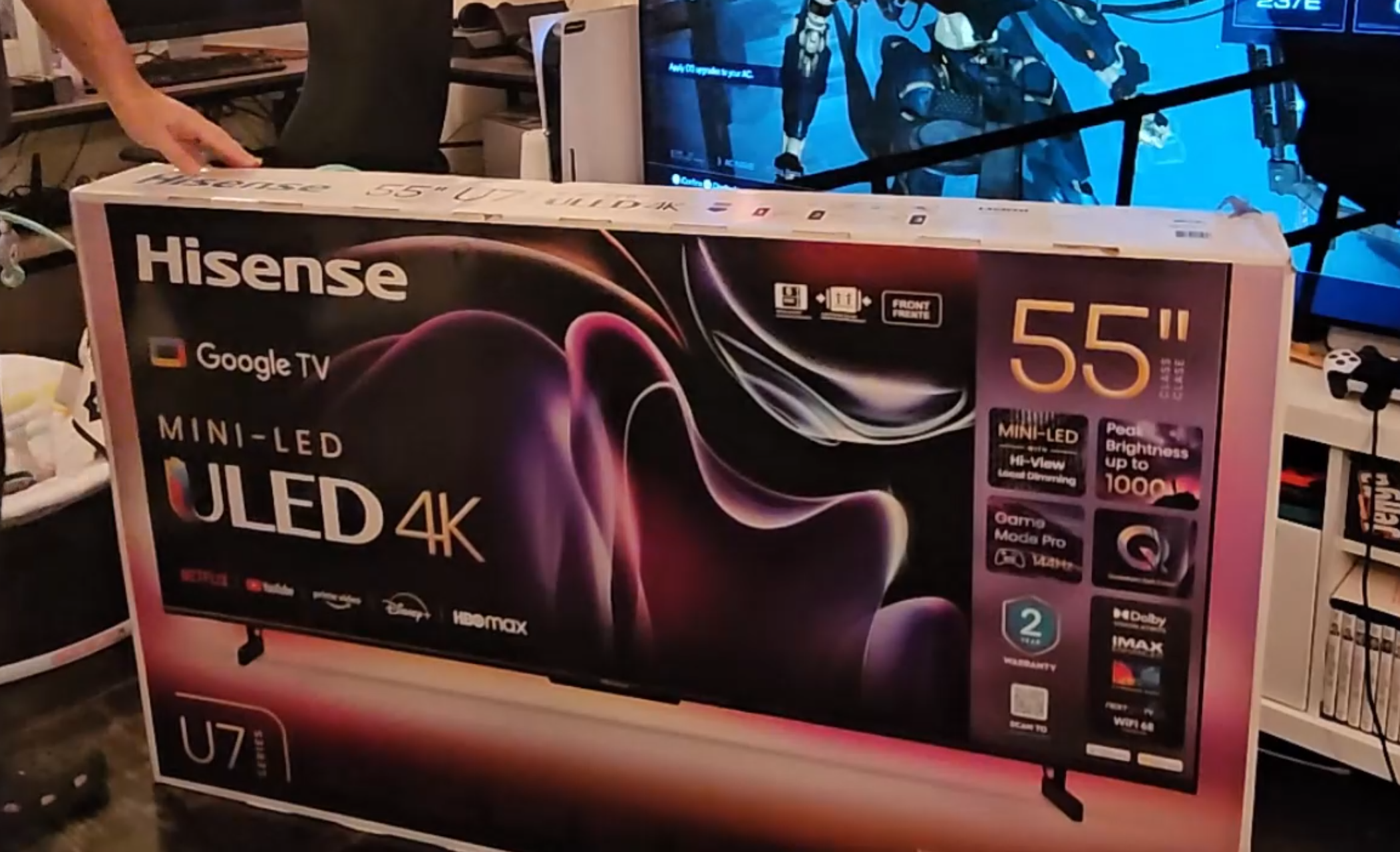

The Hisense U7K Series has emerged as a contender for the crown with its impressive spec sheet. Boasting features like 144Hz VRR, 4K Google TV, Quantum Dot, and Mini-LED, it aims to rival established players like the LG G1 TV. I’ll dissect the U7K Series in scrutinizing ways regarding its performance, design, and user experience. Does it stand toe-to-toe with the big leagues, or is it just another entry in the crowded TV market?
The Quantum Dot Realm
At the heart of the U7K Series is its ULED picture quality, coupled with Quantum Dot enhancement. The promise of vibrant and accurate colors, deep blacks, and high contrast is evident upon first glance. The Mini-LED technology contributes to the precision of local dimming, with FALD boasting an impressive 500+ zones, pushing the HDR peak brightness to 1000 nits. How does this translate to real-world viewing? Extremely well. Positioning yourself at side views produced a comfortable look for everyday use. Long sessions in these angles were fairly decent and precise during gaming competitive play – not my ideal position mind you, but it works all the same. The Quantum Dot technology ensures a wide color gamut, giving HDR content that extra pop. Dolby Vision and HDR10+ support provide compatibility with the latest content standards, enhancing the dynamic range. While the peak brightness is said to reach 1000 nits, I found that when adjusting my HDR setting in-game varied and usually hovered best around 610 peak brightness. This was my baseline setting with picture mode on HDR Game, Brightness: 100, Gamma: ST2084 (though I wasn’t able to change that manually), Color Temp to Cool and Dynamic Tone Mapping off. I typically turn off all TV forced settings such as noising since it usually impacts response time during competitive gaming. HDR did impact gameplay during its initial introduction, but the tech has improved greatly this past decade. I don’t have the space for a side-by-side comparison with my LG G1, but there are subtle differences that gives LG G1 an edge like less color accuracy on the U7 in comparison. This is Hisense’s 55U7K model.
The U7K Series flaunts its 144Hz VRR Panel, a feature I did not expect on a consumer TV, especially of this size. Hisense takes gaming seriously, thankfully, and it’s evident in Game Mode. AMD’s Freesync Premium Pro is supported here, which should sweeten the deal for gamers seeking to take their gaming PC to the next level. The VRR-enabled TV panel delivers, and the Game Blast 240 ensures a buttery-smooth gaming experience. What that means is the U7 series can produce 4K resolution up to 144hz with VRR and Game Blast allows the TV to push even further at 1080p resolution up to 240hz. With the ability to use Game Bar, its pretty easy to adjust the setting while gaming. I’ve tested this with Destiny 2 and SF6 during online mode and its great. Dolby Vision Gaming adds a layer of visual sophistication, and I hate to make a comparison to a nearly $3000 TV like the LG G1, but its OLED technology does have an edge in pixel response time, creating a crisper image during fast-paced scenes – but that’s not to say it doesn’t compete – at $649 starting point, you can have the competitive edge without breaking your bank.
4K Google TV and Voice Control

Moving beyond hardware prowess, the U7K Series features 4K Google TV, a smart platform that integrates seamlessly with the Google ecosystem. Google Assistant and Chromecast Built-in, along with compatibility with Amazon’s Alexa, provide a comprehensive smart home experience. The inclusion of Far Field Voice Control and a Voice Remote enhances user convenience. The U7K’s approach to smart features, emphasizing user-friendliness. The 4K Google TV interface is intuitive, making navigation a breeze. I really have no complaints here other than this is my first time using a Google powered TV and I love it.
Audio is not neglected in the U7K Series, with Dolby Atmos® support and a robust 40W 2.1 Multi-Channel Audio system. IMAX Enhanced and Filmmaker Mode cater to cinephiles, promising an immersive audiovisual experience. Bluetooth Audio connectivity adds versatility to your audio setup. The U7K Series doesn’t skimp on connectivity, offering 4 HDMI ports (1 HDMI w/ eARC & CEC), 2 HDMI 2.1 (up to 4K@144Hz), and a variety of other inputs. I particularly like the way each input is labeled – sure it’s standard but you’d be surprised how often it’s not considered. Wi-Fi 6e ensures high-speed internet connectivity. The near bezel-less design with cable management and its durable metal stand adds a touch of surprising elegance to your living room.
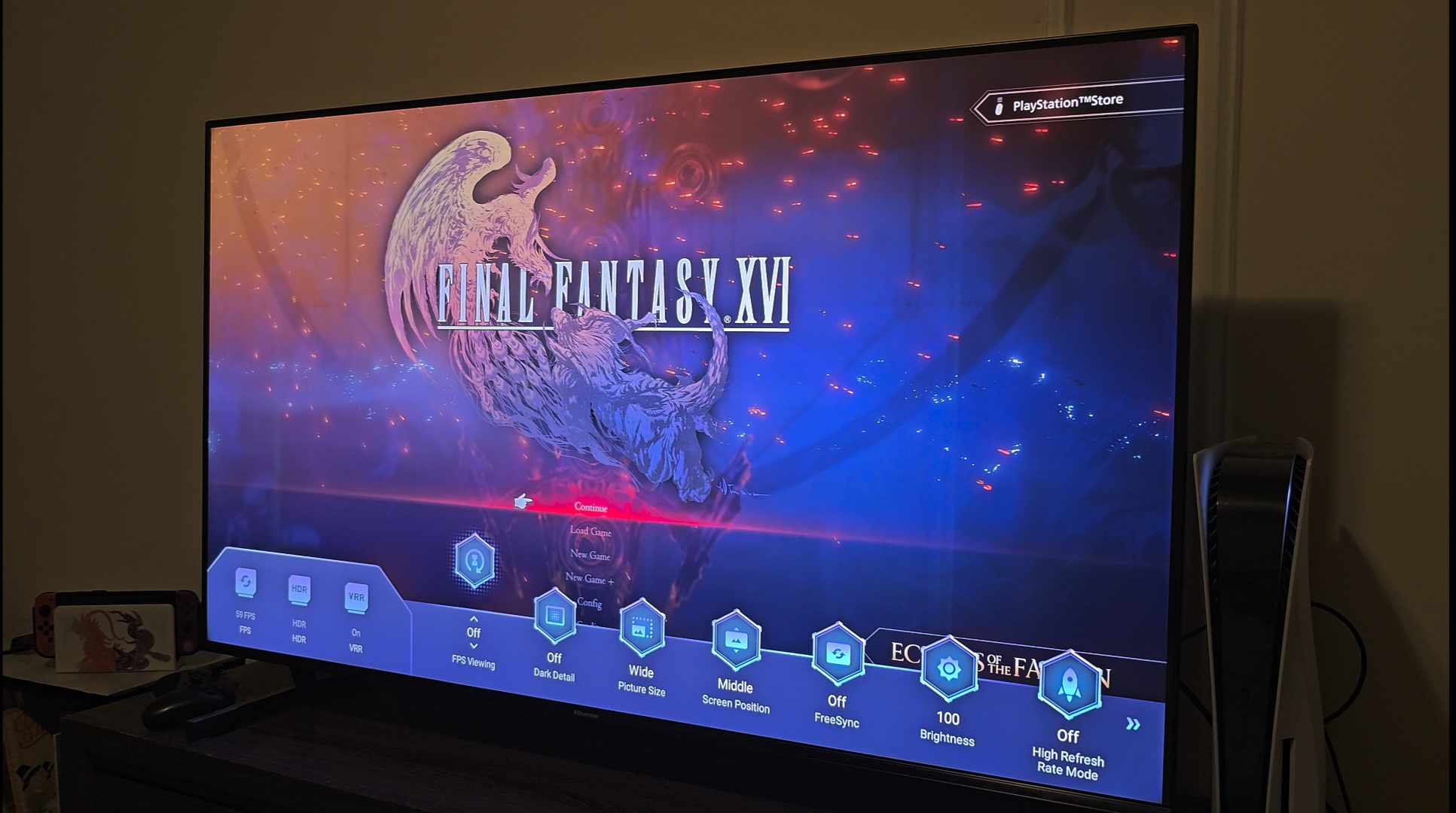
As I mentioned, one of the U7K Series’ strongest selling points is its competitive pricing, starting at $649 MSRP. This places it in a sweet spot, appealing to consumers seeking high-end features without breaking the bank. The two-year warranty adds an extra layer of assurance. In the showdown between the U7K and premium TV, price becomes a crucial factor. The U7K’s affordability makes it an attractive option, especially for those who prioritize value for money.
REVIEW SCORE: 9/10
The Hisense U7K Series stands tall with a compelling combination of features, performance, and affordability. Its ULED® Picture Quality, 144Hz VRR Panel, and 4K Google TV make it a strong competitor in its class. However, the LG G1’s OLED technology and nuanced color reproduction give it a slight edge in certain areas. Ultimately, whether you lean towards the Hisense U7K or a more premium model depends on your priorities. If budget-friendly excellence is your mantra, the U7K Series delivers.
For more on Hisense U7 Series and gaming, follow me on all my social media here

