

Played on Steam and PS5 Pro | SPOILER FREE
It has been roughly two decades since Capcom released a brand-new mainline Onimusha, and the action-game landscape it returns to is almost unrecognizable from the one it left behind. Games such as Sekiro: Shadows Die Twice, Nioh, Ghost of Tsushima and an entire generation of Soulslikes have changed expectations for sword-based combat. Precision, parrying, animation commitment and mechanically demanding boss encounters are commonplace now, leaving Onimusha: Way of the Sword with the unenviable task of reintroducing itself to players who may have never touched the originals while simultaneously proving that the franchise still has something meaningful to offer.
I approach games as a gamer first, and while mechanics are obviously fundamental to how I evaluate them, I’m ultimately chasing something broader. I want satisfying gameplay, but I also want immersion. I want technical excellence and strong performance, but I want those things to contribute to a larger sense of wonder. I want those moments where analyzing the game temporarily disappears from my mind because I’m simply enjoying what I’m playing. Onimusha: Way of the Sword gave me those moments constantly. Capcom has taken the identity that made Onimusha memorable, filtered it through more than 20 years of advancements in action-game design, and produced something that feels remarkably confident in what it wants to be. There are some blemishes surrounding its optional content, but they are minor scratches across an otherwise beautifully forged piece of armor.
A Story I Never Wanted to Skip
I want to touch on how Capcom used the likeness of legendary Japanese actor Toshiro Mifune for Miyamoto Musashi and how it immediately gives Way of the Sword a striking visual identity, and thankfully there’s considerably more happening here than an impressive face model. This interpretation of Musashi has personality. He’s confident, stubborn and occasionally arrogant, but there’s humor and humanity underneath that bravado that prevents him from becoming another perpetually stoic samurai protagonist.
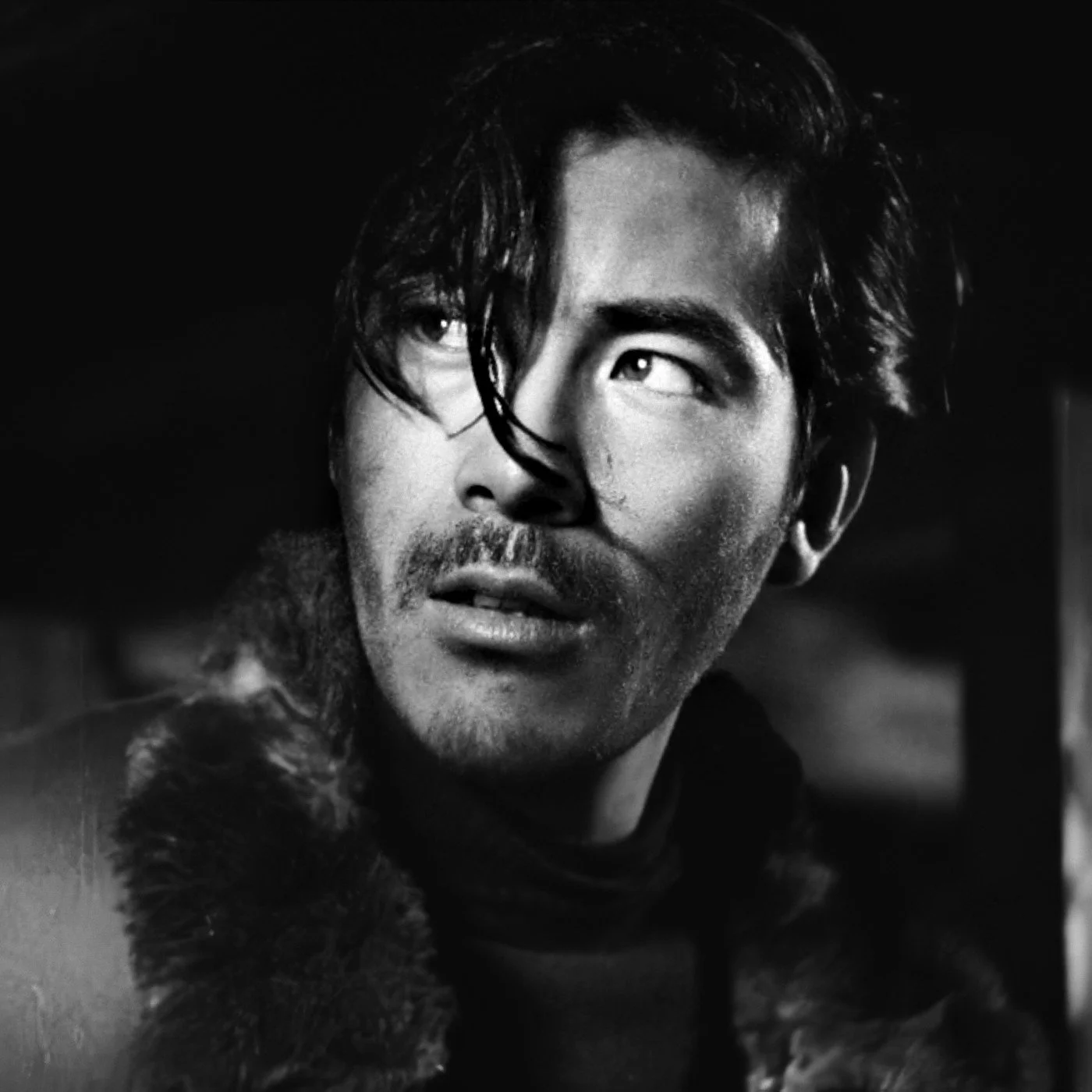
What surprised me just as much as the quality of the gameplay was the story itself. Onimusha never really had a stupendously amazing story to tell; it was always the cherry on top of the gameplay—but that changes with Way of the Sword. Onimusha gives Miyamoto Musashi a strong personal arc, beginning with a stubborn swordsman focused largely on proving his strength before gradually pulling him into something far bigger than himself. His relationship with the Oni Gauntlet works especially well because he doesn’t immediately embrace it as a gift. It conflicts with his pride and his belief in earning victory through his own skill, which gives his growth throughout the game more weight.
I also loved how much personality the story gives Musashi and the supporting cast. He’s confident, sarcastic, stubborn and occasionally ridiculous, which helps keep him from becoming another overly stoic samurai protagonist. The game balances horror, drama and humor surprisingly well, and I genuinely looked forward to the next cutscene because the characters and their interactions remained entertaining throughout the entire journey. Watching Musashi’s priorities shift and seeing how the larger conflict reshapes his understanding of strength gave the adventure a satisfying emotional backbone. I loved practically every moment of it, and for a game that could have easily coasted on exceptional swordplay alone, that narrative investment became one of the biggest reasons Way of the Sword stayed with me.

Walking the Way of the Sword
Combat is unquestionably the centerpiece of Way of the Sword, and Capcom absolutely nails it. There’s an immediate physicality to Musashi’s movements that makes sword fighting feel dangerous rather than performative. Blades violently collide, attacks carry convincing weight, sparks explode from steel, and enemies visibly respond to the force behind Musashi’s strikes. The animation and sound design reinforce every interaction, creating combat that feels satisfying before you’ve even begun understanding how deep its underlying systems can become. That depth gradually reveals itself through blocking, deflections, parries, dodging, Issen attacks and the increasingly broad collection of techniques available to Musashi. The brilliance of the system is that these mechanics aren’t simply different buttons accomplishing variations of the same defensive action. Enemy attacks force you to recognize what’s coming and determine the appropriate response, while positioning and enemy composition become increasingly important as encounters become more complicated. Issen attacks are sharper and more difficult than ever, even with some tools to support them, because their precise timing introduces a meaningful element of risk and reward—and the risks are high, even if failure doesn’t carry Soulslike consequences. Successfully reading an incoming attack and turning that aggression back against an enemy never stopped feeling incredible.

Eventually, I found myself entering that wonderful state that only the best action games manage to produce, where conscious thought starts giving way to instinct. Instead of mentally cycling through mechanics, I was reading animations, reacting to attacks, repositioning, deflecting and transitioning between targets naturally. The controller almost disappears from the equation, leaving only Musashi and whatever unfortunate Genma happens to be standing in front of him. That’s where Way of the Sword elevates itself beyond simply having a good combat system; its mechanics become a genuine extension of the character you’re controlling.
The Bosses Are More Than They Look
Naturally, the boss encounters are where Capcom gets to push those mechanics to their limits, and they’re easily among the highlights of the entire experience. There’s plenty of spectacle involved, but what impressed me more was how effectively these battles challenged my understanding of the combat system. Positioning and recognizing attack patterns matter, while defensive timing and knowing when an opening allows aggression become increasingly important, bringing out some of the most peak moments in gaming today. The best encounters also manage to avoid feeling like mechanically elaborate health bars. They have personality and visual identity, and the supernatural nature of Onimusha gives Capcom enormous freedom to create creatures and situations that would feel completely out of place in a more grounded samurai adventure. I frequently found myself wondering what bizarre monstrosity the game was going to put in front of me next, and it rarely disappointed–in fact, it overly exceeded my expectations.

I actually looked forward to fighting these bosses; difficulty alone doesn’t make an encounter enjoyable; it’s the act of doing it. The combination of excellent mechanics, strong visual presentation and carefully designed attack patterns made learning these fights satisfying even when I wasn’t immediately successful. Every encounter became another opportunity to demonstrate how much better I’d become with Musashi’s increasingly impressive arsenal.
A Beautifully Twisted Kyoto
The elephant in the room for me was how much Capcom’s rendition of Kyoto would impress me compared to Assassin’s Creed Shadows. Plot twist: it absolutely does, largely because Capcom has considerably more creative freedom with its interpretation. Kyoto provides a gorgeous historical foundation that becomes increasingly twisted by the supernatural nightmare unfolding around it. There are moments of genuine beauty juxtaposed against grotesque creatures and unsettling environments, and that contrast gives exploration an atmosphere distinct from the game’s relentless combat. This is also another excellent showcase for Capcom’s RE Engine. Character models are outstanding, facial animation is expressive, materials hold up remarkably well under close inspection, and environmental lighting can transform otherwise ordinary locations into some genuinely striking scenes. Combat animation deserves particular recognition because the fidelity isn’t merely decorative. Musashi’s movements communicate momentum and intent, while enemy animations provide the readability necessary for a combat system so dependent upon reaction and timing.

That’s an important distinction for me when discussing visual fidelity. I’m not particularly interested in graphics existing solely to produce attractive screenshots. Technical excellence becomes much more meaningful when it improves immersion or gameplay, and Way of the Sword consistently understands that relationship. Its visual effects, animation, environmental detail and audio presentation combine to strengthen the physicality of combat and make the supernatural transformation of Kyoto substantially more convincing. The only drawback is that ray tracing, whether on PC or PS5 Pro, is limited to reflections. As a result, indoor areas can lack convincing indirect lighting and shadowing, making some locations appear more brightly lit than they should.
Exploration Without the Open-World Bloat
One decision I particularly appreciated was Capcom resisting the temptation to transform Onimusha into another enormous open-world game. Way of the Sword feels like a deliberately crafted adventure rather than a map designed to keep players occupied indefinitely, and that tighter structure benefits the experience tremendously. There are still opportunities to explore, discover secrets and step away from the primary path, but the world rarely loses sight of forward momentum. Locations feel like places created around encounters and atmosphere rather than geographical spaces built primarily to accommodate hundreds of icons. In an industry where sheer scale is still frequently treated as a selling point, there’s something refreshing about a game understanding exactly how large it needs to be. Progression complements that structure nicely. Gathering souls and strengthening Musashi creates a satisfying loop because upgrades feed directly back into the strongest element of the game: combat. New abilities and improvements don’t merely increase numbers behind the scenes; they expand the possibilities available during encounters and encourage further mastery of an already excellent combat system.

However, if there’s one aspect of Way of the Sword that slightly tinged the armor during my experience, it’s some of the side content. The optional material simply doesn’t always reach the extraordinary quality of the main progression, particularly when placed alongside such excellent combat encounters, bosses and handcrafted story sequences. There were moments where completing optional activities felt more like satisfying the expectations of a modern action-adventure game than experiencing something Onimusha itself genuinely needed. None of it is particularly disastrous, but when the central experience operates at such an incredibly high level, anything merely “good” becomes considerably easier to notice. Those complaints disappeared from my mind quickly, however, due to the sheer level of quality throughout the rest of the experience. The consistency of everything Way of the Sword does exceptionally well prevents its weaker side content from ever becoming representative of my overall experience.
Onimusha Doesn’t Need Nostalgia Anymore
Perhaps the greatest compliment I can give Way of the Sword is that somewhere along the journey I stopped thinking about it primarily as the return of a franchise that had disappeared for two decades. Nostalgia might get longtime fans through the door, but this game doesn’t need nostalgia to justify itself. Capcom has built an action game capable of standing confidently alongside its modern contemporaries without sacrificing the qualities that distinguish Onimusha from them. Its combat has its own rhythm, its world has a distinctive personality, its protagonist is memorable, and its supernatural interpretation of historical Japan allows it to embrace imagery and encounters that few other games could convincingly attempt.

That’s how I want to see dormant franchises return. Don’t simply reproduce what worked 20 years ago, and don’t strip away the original identity in an attempt to imitate whatever happens to be successful today. Understand why people loved the original concept, identify where modern design can improve it, and build something capable of creating new fans rather than surviving exclusively on the memories of old ones.
REVIEW SCORE: 10/10
Did I love playing it?
With Onimusha: Way of the Sword, the answer is emphatically yes. I loved learning its combat, mastering its timing, encountering its bosses, watching Musashi develop and discovering what increasingly bizarre corner of this supernatural nightmare Capcom was going to reveal next. More importantly, I consistently wanted to pick the controller back up and continue playing.
The side content occasionally dulls an otherwise exceptionally sharp blade, yet those imperfections were quickly forgotten beneath the sheer level of excellence surrounding them. Way of the Sword gave me the gameplay, immersion, technical fidelity and, most importantly, that sense of wonder I continue chasing whenever I start a new game. After roughly two decades away, Onimusha didn’t just need a successful comeback. It needed to prove that it still had a place in modern gaming.

