
Played on a custom PC with a RTX4090 and a ROG Strix Scar 18 housing a RTX5080
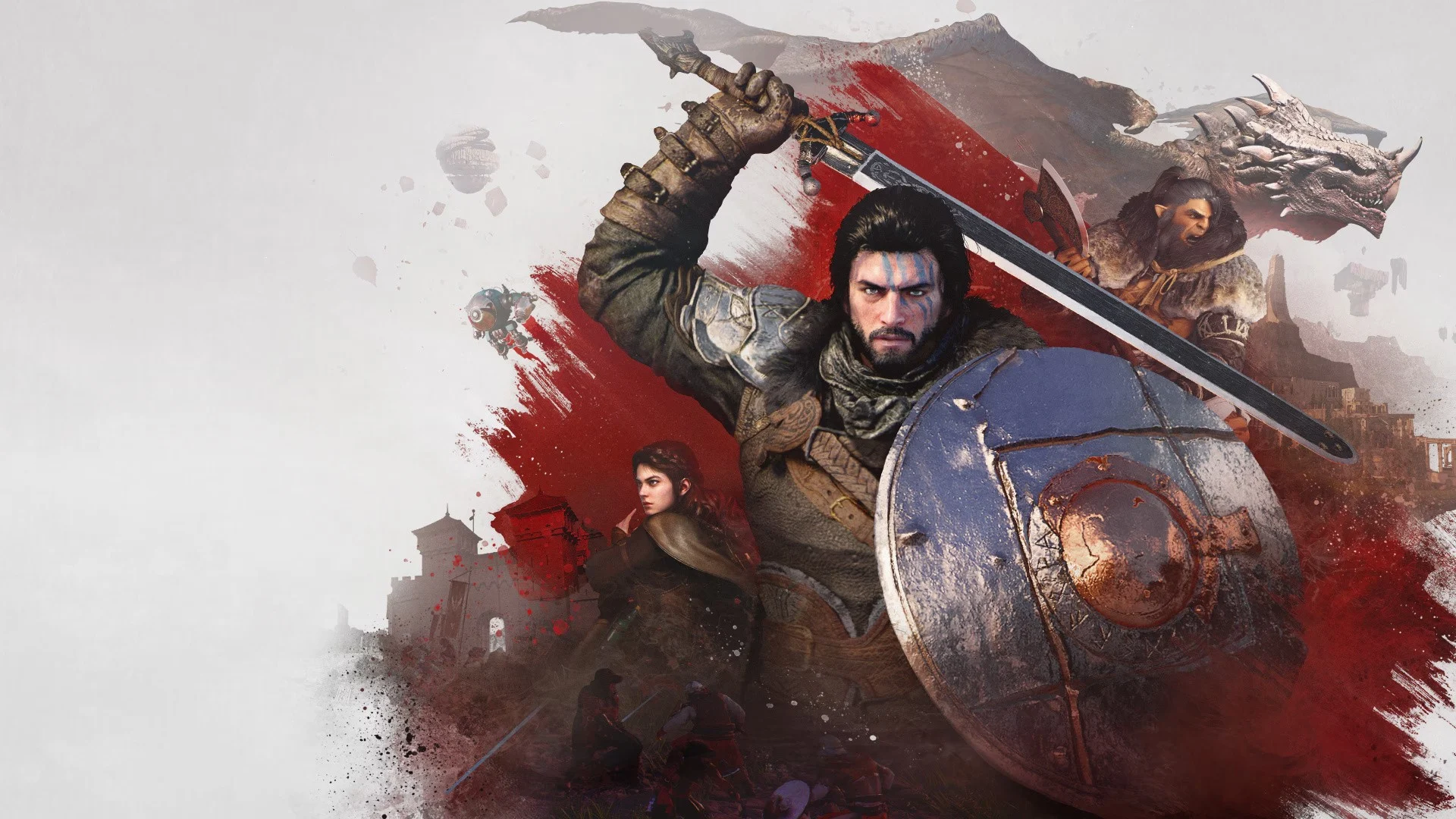
There are open-world action RPGs that impress you with scale, and then there are games like Crimson Desert that make scale feel almost secondary to the density of what’s actually inside it. After spending 110 hours with the game on PC at max settings, I walked away feeling like I had barely scratched the surface. That is both one of Crimson Desert’s greatest strengths and, at times, one of its biggest challenges. This is a massive, systems-heavy fantasy adventure set across the war-torn lands of Pywel, and it constantly feels like it is trying to do more than the average open-world game. It wants to be cinematic, reactive, physical, and mechanically layered all at once. More importantly, it often succeeds. Between its weighty combat, astonishing environmental detail, organic side activities, and a world that feels packed with possibility every few minutes of traversal, Crimson Desert delivers one of the most ambitious action RPG experiences I’ve played in a long time.
It is not flawless. The early pacing is rough, the story can lose itself in odd detours, and several quality-of-life issues hold parts of the experience back from true greatness. Even so, what Pearl Abyss has created here is remarkable. Crimson Desert is the kind of game that can frustrate you in one moment and then completely overwhelm you with awe the next.
A Tale Once Told
Crimson Desert tells a story that is, at its core, fairly predictable, but still entertaining thanks to strong world building and a genuinely interesting mythological backbone. The narrative leans into themes surrounding ancient cosmic powers known as the Abyss, the delicate balance those forces affect, political tension between kingdoms and factions throughout Pywel, and the personal journey of regrouping lost comrades in a fractured world. There is also a compelling blend of the mystical and the mechanical woven into the world, and that contrast works far better than I expected. Where the story stumbles is in its structure and in its protagonist. Kliff is not a particularly dynamic lead. He is mostly one-dimensional, largely silent, and oddly unmoved by the fantastical events happening around him. Very early on, he is killed by the Black Bear leader and then resurrected by a mysterious cosmic force, yet the game gives him almost no emotional reaction to that moment. That lack of internal weight makes it harder for him to anchor the more dramatic beats of the story.
The opening hours are also awkwardly paced. Rather than strongly building momentum around Kliff’s resurrection, the Greymanes, or the larger conflict, the game often pushes him into tasks that feel disconnected from the urgency of the main plot. One moment he is helping a homeless man, then rescuing a noblewoman in a tunnel, then helping a child get her cat down, then clearing out a chimney for a tailor. There is a thread tying some of these encounters together through the mysterious disappearances of the people involved, but the cadence still feels scattered. That unevenness does not just affect the beginning either. At points later in the game, entire stretches of the story feel oddly assembled, and I found myself getting lost in the plot more often than I would have liked.
That said, the moment-to-moment presentation of the story is often excellent. The voice acting is incredibly well done overall, and the level of motion capture work adds an enormous amount of personality to the characters and scenes. Even when the narrative path is not always clean, the performances do a lot of heavy lifting. There is care here, and that care shows.
From Man to Machine

This is where Crimson Desert truly shines.
The best way I can describe its combat and traversal is that they feel embedded into the world. There is a heaviness to movement, a physicality to action, and an attention to animation that constantly sells the idea that Kliff is interacting with a real space rather than simply gliding through a game system. It immediately reminded me of the kind of deliberate animation work and environmental responsiveness that games like Red Dead Redemption 2 are celebrated for, though Crimson Desert applies that philosophy to a much faster, more combat-driven experience. Combat is layered, demanding, and deeply satisfying once it clicks. There is a learning curve here, but it is a learning curve worth mastering. The synergy between Axiom Grip, Axiom Force, hand-to-hand combat, grapples, and multiple weapon combinations gives every encounter a cinematic rhythm. You can shift between a greatsword, dual blades, sword and shield, sword and axe, shield and axe, polearm, and then finish an enemy with a perfectly timed precision bow shot. When it all comes together, it looks and feels incredible.
What I loved most is how much intention there is in the system design. Combat animations are contextual and directional. Certain inputs change based on your position relative to the enemy or the angle of your movement. A front-facing input may stun, while a directional variation can turn the same exchange into a slam. Grappling from behind opens up its own branching behavior, and even small actions like throws, slides, stumbles, or alternate descents down steep terrain contribute to the sense that Crimson Desert wants every movement to have tactile identity. The game’s focus and interaction system is also fantastic. It creates a sense of intimacy with the world that many open-world games fake with simple prompts and highlights. Here, objects are physically rendered and interactable. You can grab items, open drawers, check cabinets, place objects, and manipulate the environment in ways that make exploration feel more deliberate. I especially appreciated that items are actually modeled in the world instead of relying on the usual glowing loot shorthand. It adds so much to immersion.
That commitment to physical detail extends everywhere. Horse muscles flex and bounce, environmental objects are breakable, some destructibles hide additional items, elemental effects can cascade naturally like fire spreading across wood, and NPC collisions actually register. It all contributes to an experience where the world does not just look detailed, it behaves like it has material presence. There is no traditional leveling system, and I actually liked that choice. Progression is instead tied to upgrading gear through gathered materials like ore and hide, then pushing builds further through the use of Abyss cores found through exploration and questing. Those cores are one of the game’s coolest ideas. They do more than raise stats. They can radically change how you approach combat. Some unleash swarms of crow-like projectiles. Others trigger cascading earth spikes on impact or transform attacks into poisonous blood bursts. It gives the game a welcome buildcraft layer without turning the entire experience into spreadsheet design.
Crimson Desert also deserves real praise for how it respects the player’s intelligence. Once it teaches you its language, it stops handholding. It might tell you to activate a generator, but it will not point directly to the answer. You have to search, trace connections, understand the environment, and solve the situation yourself. That design philosophy creates a much more rewarding sense of participation. The game guides, but it rarely patronizes. Outside of combat and main progression, the sheer amount of life baked into the world is staggering. There is housing, Greymane camp activity, mining, fishing, arm wrestling, rock-paper-scissors, stealing, committing crimes, bounty hunting, poaching, animal theft, wagon fencing, petting and carrying cats and dogs, ancient ruins, caves, and more. It feels like every five minutes of traversal can lead to a rare piece of named loot, an unexpected activity, an organic dynamic event, or simply a breathtaking vista. This is one of the most densely packed open worlds I have played.
The faction quests are also better than I expected. They are thoughtfully designed, branch in meaningful ways, and can tie into other questlines. I loved seeing dynamic enemy behavior affect the world, including enemies overtaking strongholds. That system connects nicely to the game’s regional reputation mechanics, which reward your involvement with meaningful gear and progression incentives. Even the more routine side content, including fetch quests and emergent rescue scenarios, often compensates you well enough to make the detour feel worthwhile.
Still, Crimson Desert is not without gameplay issues. The camera sits too high, and that makes combat less readable than it should be. In intense encounters, especially indoors or in busy fights, it becomes easier than it should to lose your sense of positioning. A lower over-the-shoulder camera option would likely do wonders for both immersion and practical combat clarity. Lock-on also needs refinement. Even when targeting properly, Kliff can miss attacks in ways that feel off. The decision to let holding the attack button perform extended combos rather than requiring more precise repeated presses also reduces some of the feeling of control. It is not enough to ruin the combat, but it does occasionally fight against the otherwise excellent tactile design.
The balancing in the later game is another issue. Gear reinforcement gets steep, and the material grind becomes demanding, especially when even standard resources can already feel sparse. The situation becomes more intense once Abyss Artifacts enter the equation, since those are not only needed to unlock new abilities across all three characters, but also to push selected gear past tier four. If you then find a new piece of equipment, it does not automatically match the investment you have already made, which can force a frustrating repeat of the process. Important quests, ancient Abyss puzzles, and limited expensive vendor stock become your main lifelines. It creates a progression loop that feels rewarding in theory, but overly punishing in practice.
A World Densely Crafted
Crimson Desert is, quite simply, one of the most visually impressive open-world games I have played at this scale.
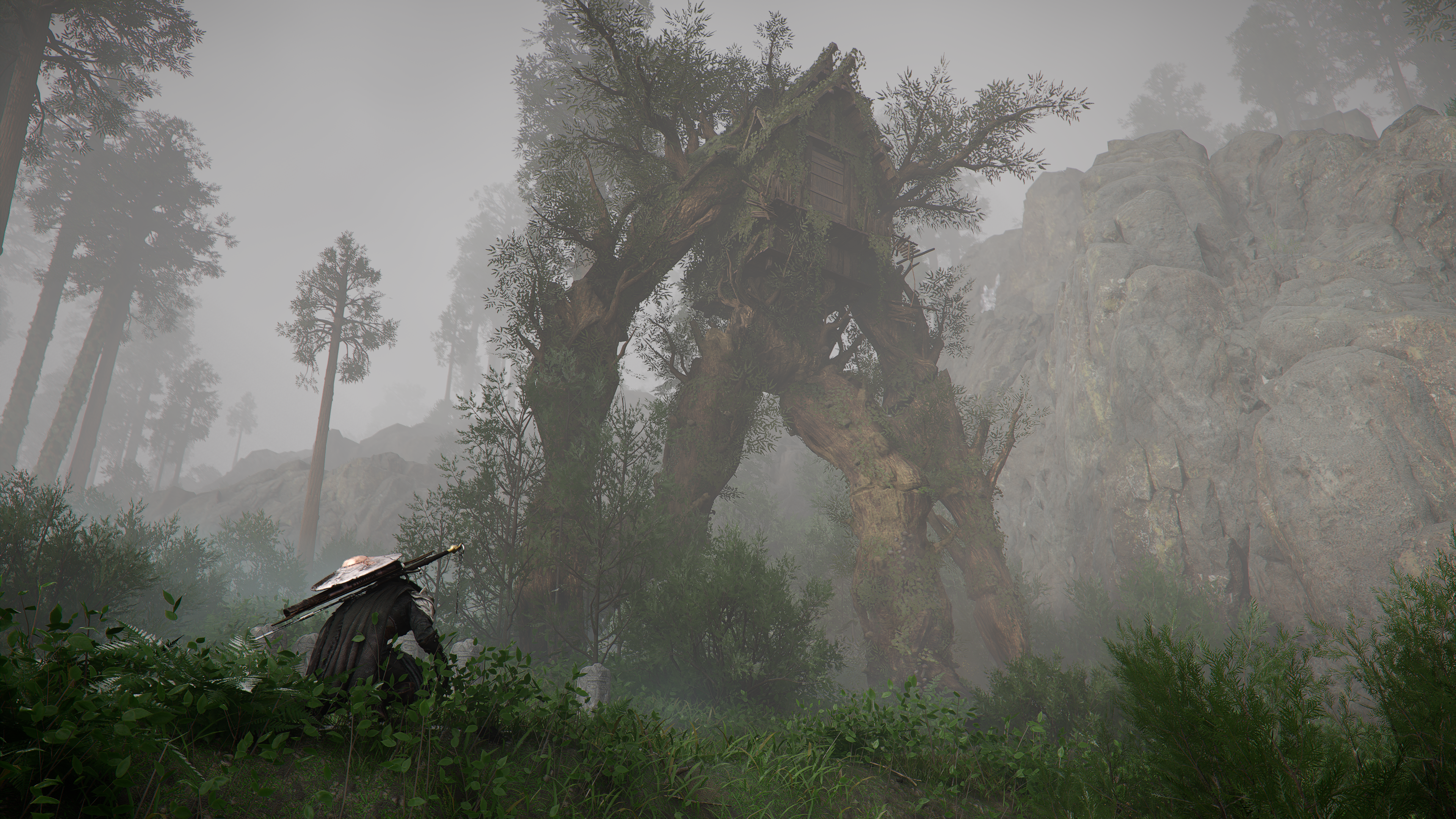
Its world is enormous, but what left the biggest impression on me was not just its size. It was the fidelity. Foliage density and variety are superb, making forests, hillsides, and open lands feel distinct rather than procedurally blended. Texture work is consistently high-end, asset placement feels deliberate, and the game’s environmental craftsmanship constantly gives the impression that this world was built with obsessive attention to detail. There are moments where you just stop and take in the sheer artistry of it all. Water physics look excellent. Foliage sways with believable dynamism. Lighting across broad landscapes can look stunning. The scale of the architecture, the layering of terrain, and the amount of environmental storytelling packed into many locations create an overwhelming sense of place.
On PC, the game is also capable of looking truly spectacular. I played on an RTX 4090, 64GB of RAM, and an i9-12900KS at native 5120×1440, using Cinematic settings with ray tracing enabled, and I was getting 70 FPS or higher before a later patch and Denuvo overhead pulled things down more into the 60s. Even with some ray tracing artifacting in lighting, reflections, and shadows, the overall image quality was sublime. The game has an artistic richness that few open-world releases can match. Where I am more conflicted is in some of the environmental consistency. While many areas are beautifully arranged, I still found myself wishing for more wear and decay in some of the towns and castles. Certain spaces come across as too clean, almost too composed, and that can make them feel a little stock despite the otherwise high detail level.
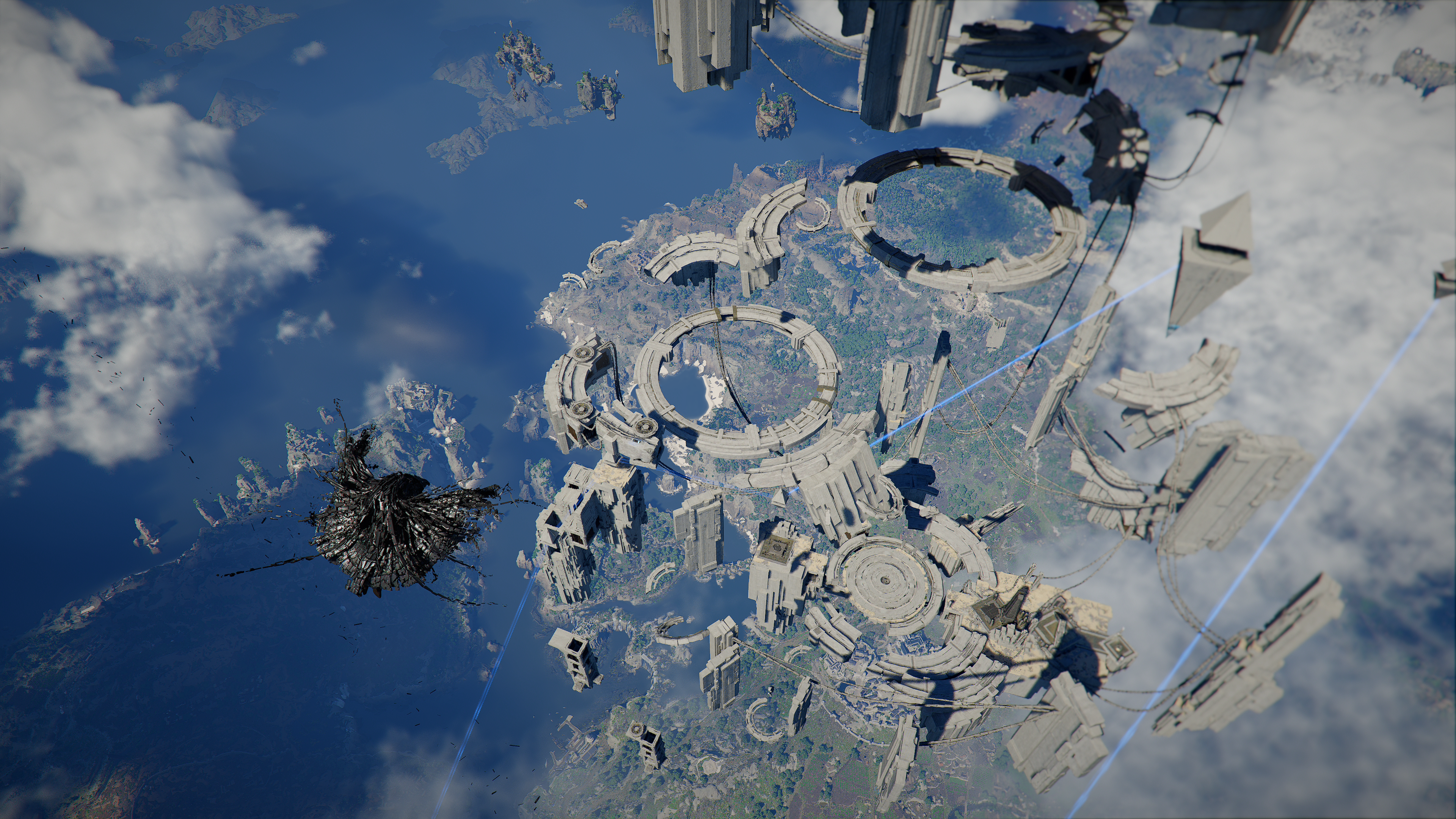
There are also technical blemishes that show up more often than they should. Rendering pop-in happens regularly, and dynamic exposure when moving in and out of interiors can swing too far in either direction, leaving the image momentarily too bright or too dark. None of this erases how gorgeous the game can be, but it does break the illusion more than a world this immersive deserves.
Immersion, Systems, and Caveats
One of Crimson Desert’s greatest accomplishments is how immersive it remains even when some of its design choices are actively inconvenient. The game is dense enough that even a slow walk through town can become memorable. NPCs react to your actions. Bumping into them registers. The world feels like it notices you. There is an unusual amount of thought put into turning simple interactions into tactile moments. That is why smaller disappointments stand out more sharply.
The UI, for example, is not especially inviting at first. There is a lot of information on screen, sorting can be cumbersome, and storage feels too limited early on. Fast travel and transitions between story or side content can also drag more than they should, which becomes especially noticeable in a game this large. For a world this rich, the lack of underwater swimming feels genuinely surprising. It is one of those missing features that stands out because so much else about the game encourages deep physical interaction with the environment.
The first 20 hours are also a real test of patience. The game spends a long time on highly animated, highly voiced fetch quests and system tutorials before it fully opens up. In fact, some of the flashier elements people may be expecting from trailers, including some of the biggest spectacle moments, arrive much later than anticipated. You can spend 40 to 60 hours before seeing some of that headline material. That is a lot to ask from players, even if the world itself remains absorbing throughout.
The sound design is strong overall, especially in action and environmental feedback, but I did notice that towns and taverns could feel quieter than they should because of the lack of ambient voices. It does not ruin immersion, but it slightly undercuts the illusion of a bustling lived-in world. I also would have loved to see fuller NPC daily cycles. The game already does enough with reactive behavior and roaming populations to make the world feel alive, but a more robust rhythm of waking, eating, working, relaxing, and returning home would have elevated the simulation side of the experience even further.

REVIEW SCORE: 9/10
Crimson Desert is one of the rare open-world games that feels genuinely ambitious in both scope and execution. It is not just large. It is layered. It is mechanically rich, visually astounding, and packed with systems that reward curiosity, experimentation, and patience. Combat has real weight and style, the world is bursting with activity, and the level of physical interaction across the board gives the entire experience a tactile identity that many modern games never achieve. At the same time, it is a game that asks for patience. The early story pacing is uneven, the protagonist lacks presence, some quality-of-life frustrations pile up over time, and the late-game progression grind can be harsher than it needs to be. But even with those frustrations, I kept coming back to one thought throughout my playthrough: there is simply nothing else quite like this right now.
After 110 hours, I still felt like I had barely explored anything, and that says everything about the kind of game Crimson Desert is. It is overwhelming in the best way, occasionally messy, often breathtaking, and nearly always fascinating. For me, that ambition, combined with just how rewarding the gameplay and world design can be, makes this one easy to recommend.
For more on Crimson Desert and gaming, follow my socials here – I also stream Mon-Sat @9pm ET over on Twitch, TikTok, and YouTube

