

Hands-on impressions from the ASUS Republic of Gamers show floor
Walking the ASUS Republic of Gamers floor at CES 2026, what stood out immediately was cohesion. Their booth wasn’t built around one hero product. ROG arrived with an entire ecosystem — laptops, desktops, displays, cooling, motherboards, and networking — all speaking the same design and performance language with even a Kojima Productions presence that blew me away!
ROG Flow Z13-KJP: A Kojima Productions Collaboration
The Flow Z13-KJP was one of the most visually arresting systems on the ASUS ROG floor at CES 2026. This limited-edition collaboration with Kojima Productions is designed for me to take home!
Designed with inspiration from Ludens, the iconic Kojima Productions symbol, the Z13-KJP features angular CNC-milled aluminum, carbon fiber accents, and subtle graphic details that immediately set it apart from standard gaming tablets. It looked less like a PC and more like a prop pulled from a Kojima universe.
Under the hood, the system is powered by AMD’s Ryzen AI Max+ 395 paired with Radeon 8060S graphics, backed by up to 128GB of unified LPDDR5X memory. The 13.4-inch Nebula Display delivers a sharp 2.5K image at 180Hz with full DCI-P3 coverage, making it equally comfortable for gaming, creative work, and touch-based interaction.
ROG Gaming Laptops at CES 2026: The Stuff That Made Me Stop Walking
ASUS didn’t treat laptops like a side dish at CES 2026. The ROG floor gave gaming laptops real space, real lighting, and enough hands-on time to understand what’s changing this year. The theme felt consistent across the lineup: premium build, stronger displays, smarter layouts, and hardware choices that make sense for both play and creation.
ROG Zephyrus Duo (2026)
The Zephyrus Duo was the head-turner. Two full-size 16-inch 3K OLED touch displays at 120Hz looked sharp even under aggressive CES lighting, with deep blacks and clean highlight control. The removable magnetic keyboard gave the system legitimate flexibility in how you set it up on a desk, and the entire machine felt more like a portable workstation than a gimmick laptop. ASUS positioned it as a flagship, powered by a latest-gen Intel Core Ultra processor and up to an RTX 5090 Laptop GPU.
ROG Zephyrus G14 (2026)

The G14 kept its identity intact: compact, premium, and built for people who want real performance without lugging a desktop replacement. ASUS confirmed configurations across Intel/AMD/NVIDIA options for this generation, with a refined chassis and upgraded Nebula HDR OLED display tech called out as a key improvement. On the floor, the G14 still felt like the most “throw it in a bag and actually use it” gaming laptop in the lineup.
ROG Zephyrus G16 (2026)

The G16 read as the more spacious sibling built for longer sessions and cleaner thermals. ASUS again emphasized next-gen silicon options and the same display focus—OLED with Nebula HDR branding and higher brightness capability. The feel of the chassis came across as more substantial than the G14, the kind of laptop that makes sense if you split time between competitive play, editing, and daily work.
ROG Gaming Monitors: OLED Done the Right Way
ROG’s monitor lineup was one of the strongest I saw anywhere at CES, built around refined OLED tech rather than raw spec chasing.
ROG Swift OLED PG27UCWM

A 27-inch Tandem OLED monitor that offers a dual-mode experience. Running at 4K 240Hz or switching to 1080p 480Hz, this panel is clearly designed for players who move between cinematic single-player titles and competitive esports. The RGB stripe pixel layout noticeably improved text clarity, something OLED monitors have historically struggled with.
ROG Swift OLED PG32UCDM Gen 3

This 32-inch 4K 240Hz QD-OLED display uses Samsung’s latest-generation panel paired with ROG’s BlackShield coating. Blacks looked deeper under show lighting, reflections were reduced, and HDR highlights popped without crushing detail. This felt like a display equally comfortable in creative work and high-end gaming.
ROG Swift OLED PG34WCDN
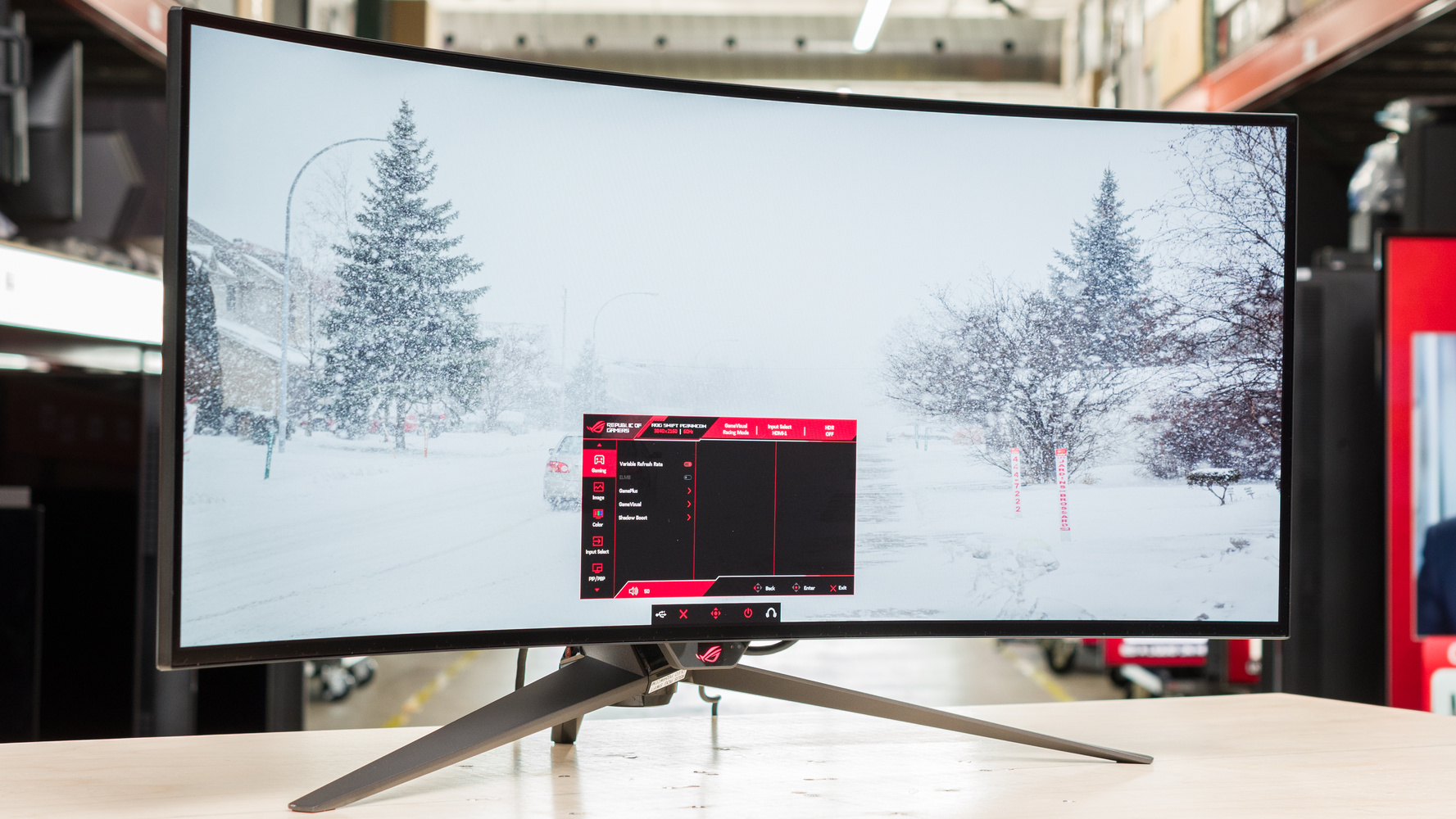
An ultrawide 34-inch 3440×1440 OLED running at 360Hz, built for immersion and speed. Motion clarity stood out immediately during fast demos, and the curved panel drew you into the image without distortion.
ROG Strix OLED XG34WCDMS
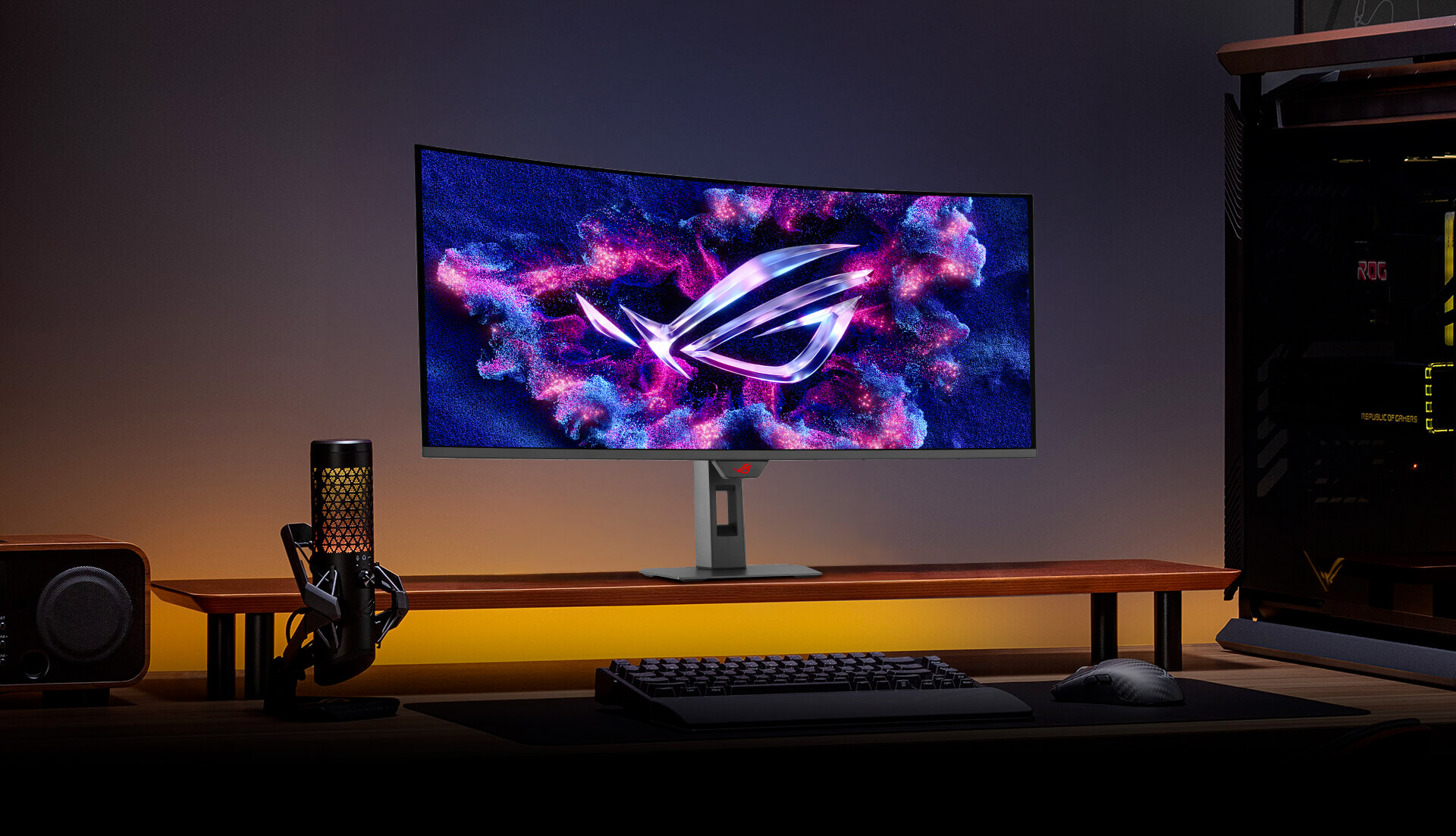
A more streamlined ultrawide OLED option at 280Hz, offering much of the same image quality in a slightly more accessible configuration. This is the kind of panel that makes long gaming sessions feel effortless.
ROG Motherboards: Built for Stability, Not Just Specs
ROG’s motherboard lineup leaned into reliability, power delivery, and future readiness.
ROG Strix X870E-E Gaming WiFi 7 Neo
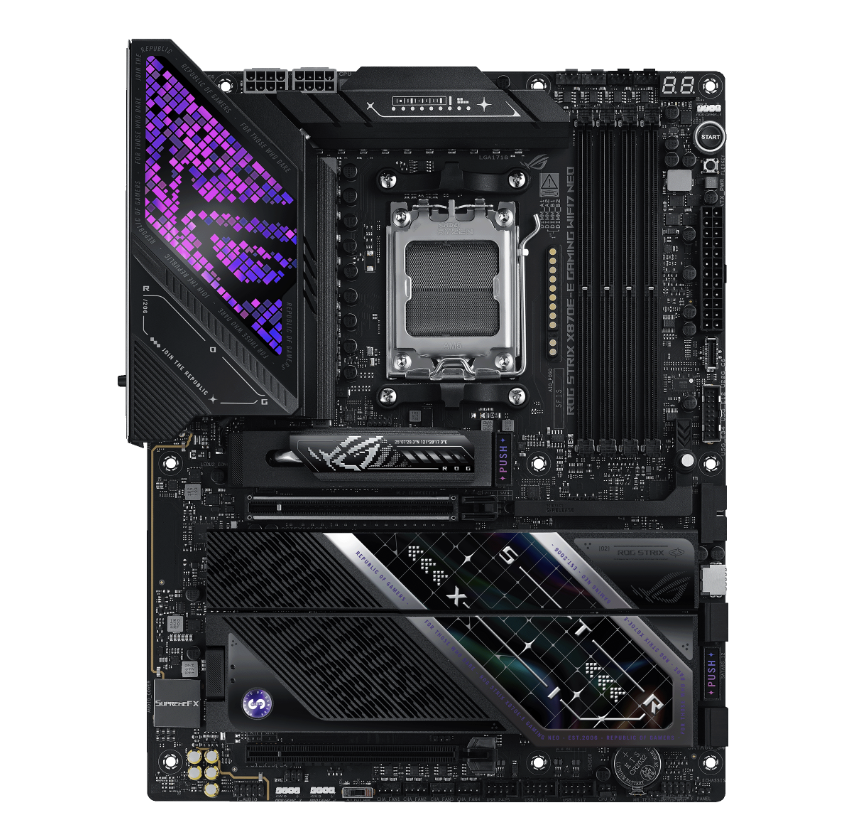
The flagship AM5 board on display. PCIe 5.0 support, robust VRM cooling, and built-in Wi-Fi 7 define this platform. ASUS also expanded the BIOS ROM size, allowing pre-loaded drivers and better long-term CPU support.
ROG Strix X870E-A Gaming WiFi 7 Neo
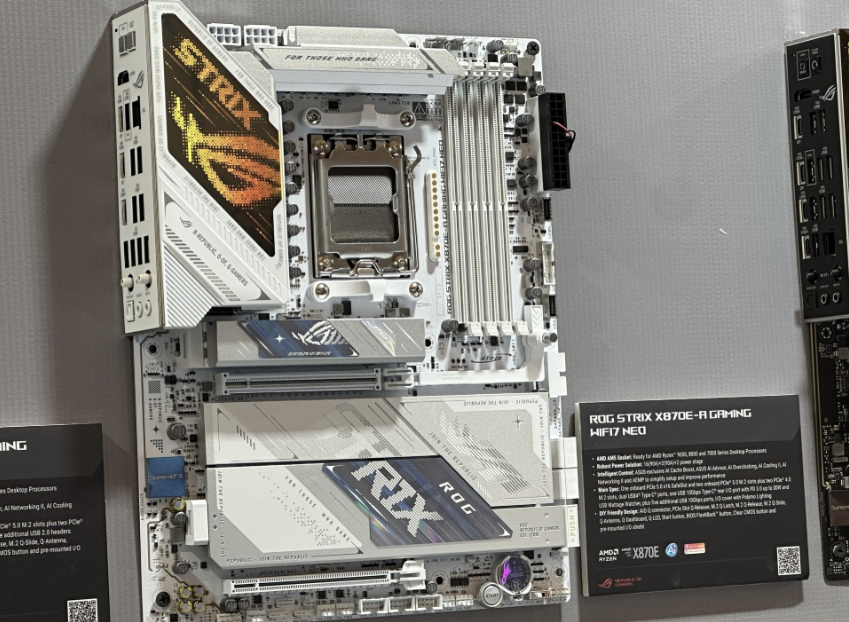
A more visually streamlined alternative to the E-model, retaining premium features while targeting builders who value aesthetics alongside performance.
ROG Strix B850-F Gaming Neo
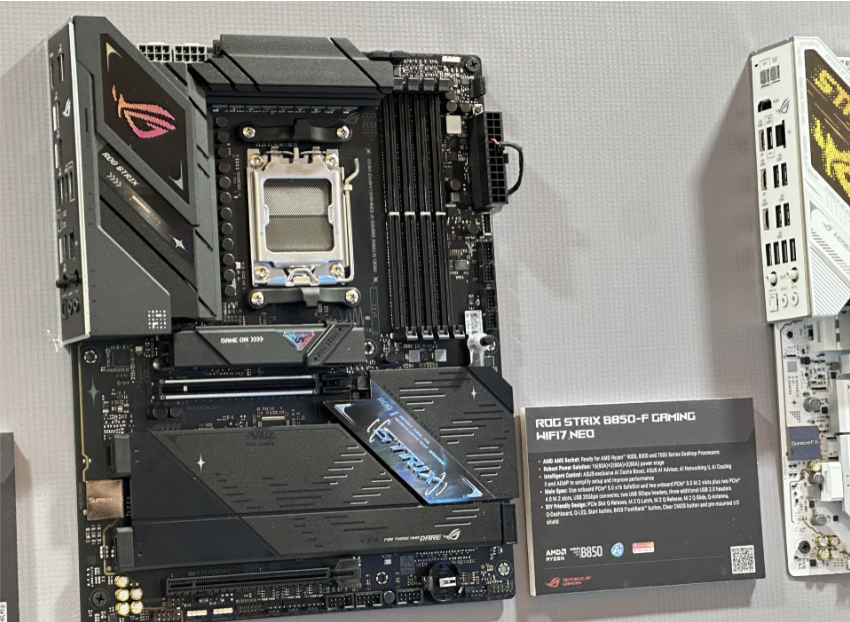
Positioned squarely for enthusiasts who want strong power delivery without stepping into flagship pricing. Stability was clearly the priority here.
ROG Strix B850-A Gaming WiFi 7 Neo
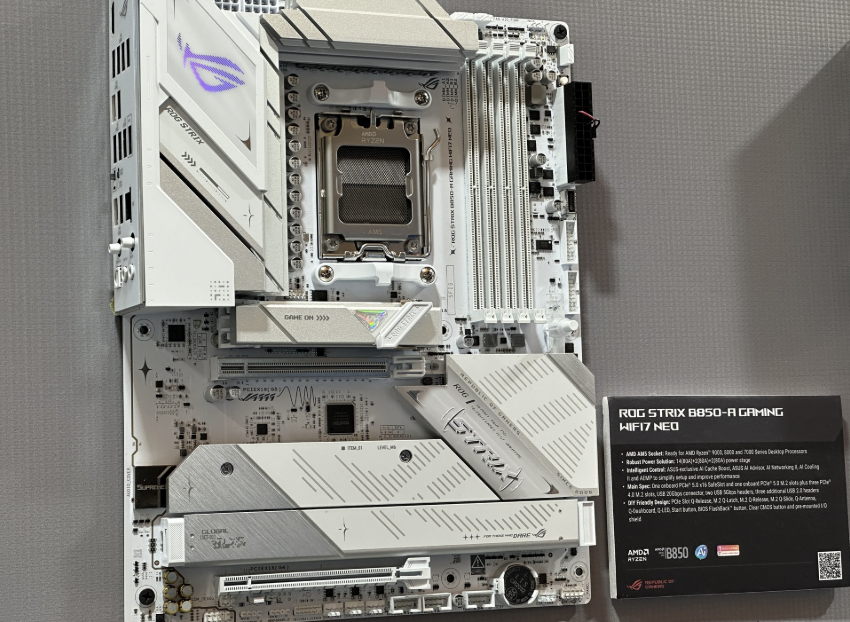
A clean, white-themed variant aimed at builders focused on design-cohesive systems, without sacrificing next-gen connectivity.
ROG Pre-Built Desktops: High-End, Fully Assembled
ROG G1000 Gaming Desktop

The G1000 stood as ROG’s flagship pre-built desktop for 2026. Configured with AMD Ryzen 9 9950X3D and NVIDIA GeForce RTX 5090-class graphics, the system emphasized sustained performance rather than headline numbers.
The chassis featured AniMe Holo lighting, clean internal layout, and airflow designed for long gaming sessions instead of synthetic stress demos. This felt like a desktop meant to be used daily, not just admired under glass.
Here’s a detailed, press-ready expansion of ASUS/ROG’s wireless gaming router and AIO liquid cooler lineup from CES 2026, written in the style of Christian Rivera for GStyleMag.com — first-person show-floor perspective, complete and polished.
ROG Wireless Gaming Router Lineup — The Next Evolution of Connectivity
At CES 2026, ASUS didn’t just bring another Wi-Fi upgrade — they teased the future of connected gaming. The wireless side of ROG’s ecosystem was unmistakable, with a clear trajectory that extends from today’s high-performance routers into tomorrow’s smartest networks.
ROG NeoCore Wi-Fi 8 Router (Concept & Demo)
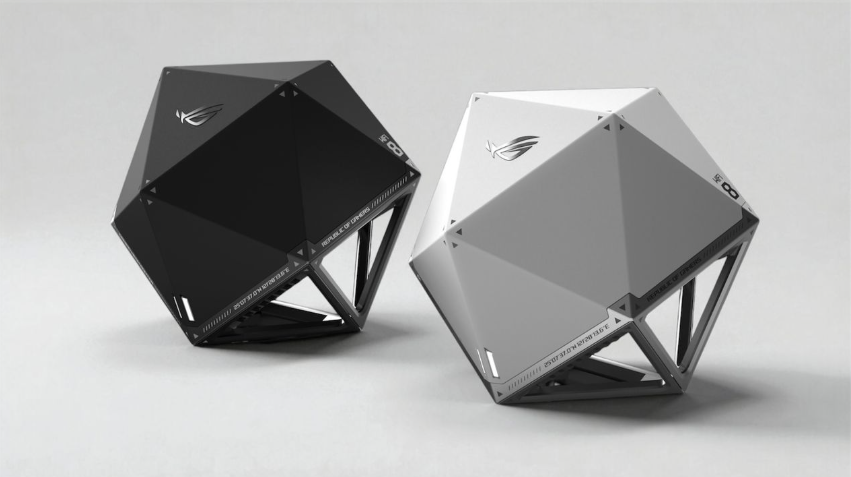
What stood out immediately on the show floor was the ROG NeoCore concept router — ASUS’s first glimpse at Wi-Fi 8-era networking at CES. Visually, it’s a departure from the “giant spider” routers of the past. Instead, ASUS presented a compact geometric design that hints at where wireless will go next.
ROG’s Wi-Fi 8 demo wasn’t synthetic benchmark hype; it was real-world throughput testing showing meaningful improvements over Wi-Fi 7 — with up to 2× higher mid-range throughput, 2× broader IoT coverage, and up to 6× lower P99 latency thanks to smarter multi-AP/multi-client coordination.
This concept isn’t just about speed. ASUS is positioning Wi-Fi 8 as a smarter, more reliable backbone for gaming, cloud streaming, and dense smart homes — where peak performance and latency matter just as much as raw throughput.
ROG Wi-Fi 7 Routers (Current Generation)
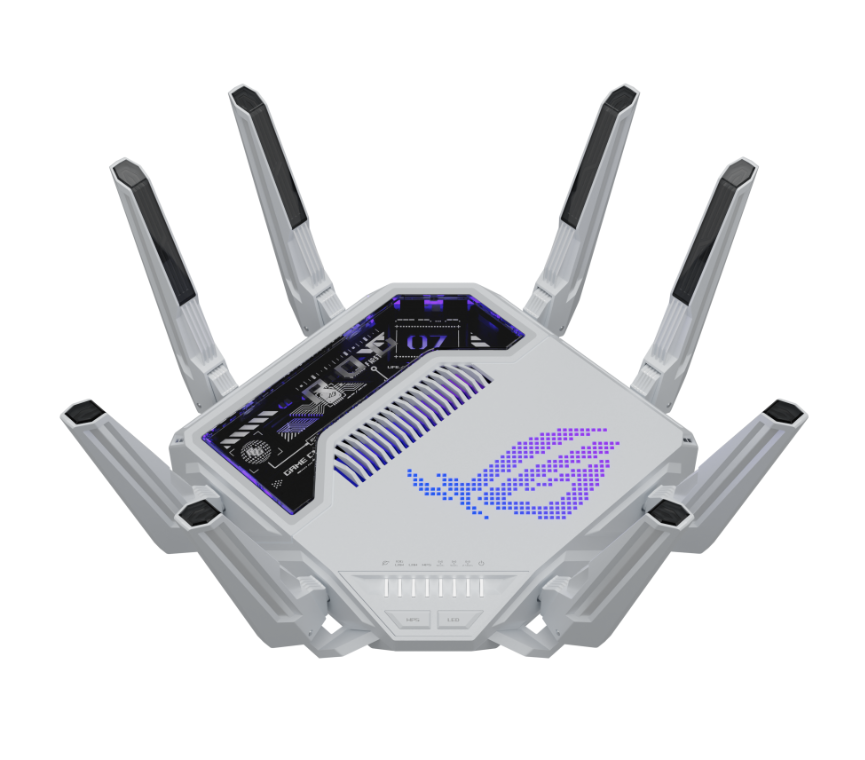
While Wi-Fi 8 stole attention as “next,” ROG’s current wireless backbone is still rooted in Wi-Fi 7 hardware that gamers can buy today. These routers deliver extremely low latency and high throughput aimed squarely at online gaming and cloud play, with robust tri-band wireless and advanced QoS for prioritizing gaming traffic.
Typical features you’ll find in the ROG Wi-Fi 7 lineup include:
- Multi-Gigabit LAN + dual 10Gb ports for wired performance
- Smart gaming traffic acceleration
- AiMesh support for mesh setups without bandwidth bottlenecks
- Dynamic frequency optimization for stable play under load
This generation is built for persistent connections — so matches aren’t lost to network stutters and multiple devices don’t choke the experience.
ROG AIO Liquid Cooling Lineup — Practical, Powerful, and Cleaner Builds
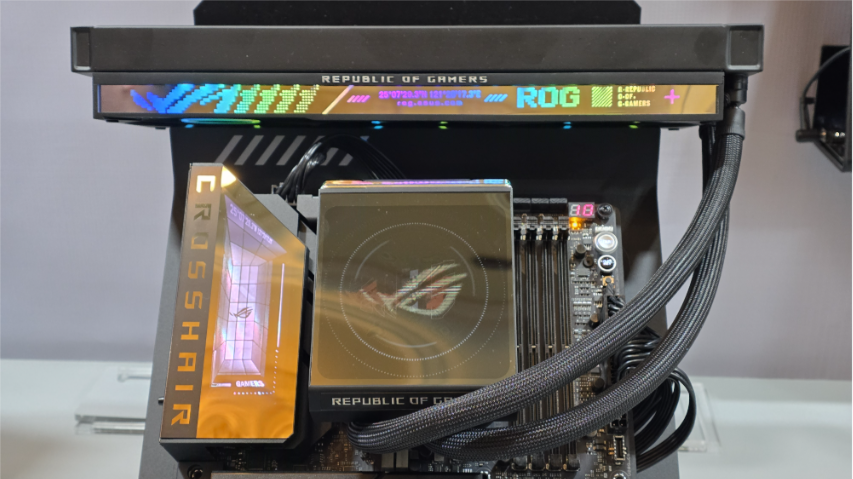
ROG’s cooling presence at CES 2026 was deeper than any previous year, and it wasn’t just about dumping heat — it was about clean execution and integration.
ROG Strix LC IV Series — Cable-Free Coolers
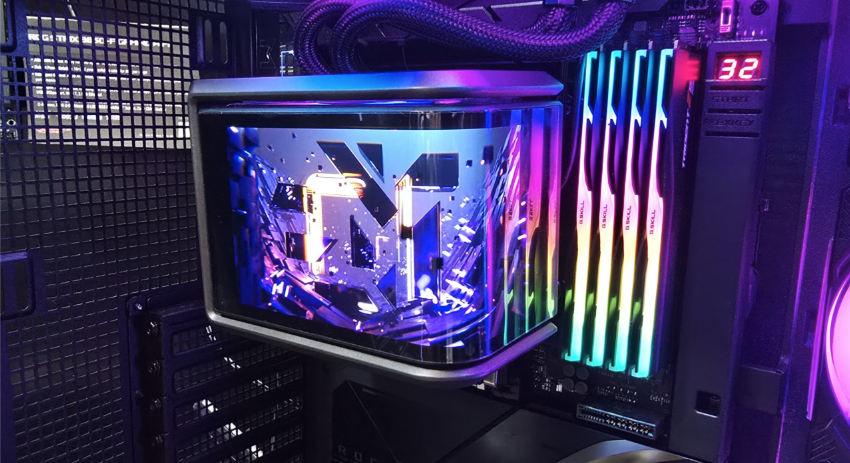
One of the most exciting reveals was the ROG Strix LC IV series, which includes multiple all-in-one liquid coolers with a proprietary AIO Q-Connector system. This connector replaces the myriad of individual wires between an AIO pump and the motherboard with a single interface, significantly reducing cable clutter and simplifying installation for builders.
The LC IV family at CES consisted of:
- ROG Strix SLC IV 360 ARGB LCD (premium) — shorter tubing and a built-in LCD that can display system data and custom visuals
- ROG Strix LC IV 360 ARGB LCD (standard) — full-sized cooler with the same 5.08-inch color display interface
- ROG Strix LC IV 360 ARGB (no LCD) — lighter, more affordable performance-oriented model without a display
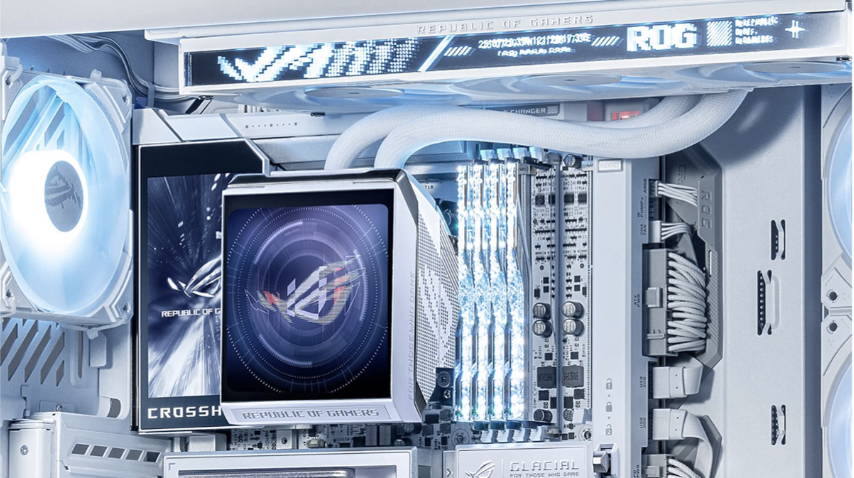
All models use premium triple-fan configurations and Aura Sync lighting, making them both performance tools and visual anchors in high-end builds.
The aim here was clear on the show floor: performance without complexity. Faster installation, cleaner cable management, and better overall thermals all matter more in daily use than raw delta-T numbers.
Ecosystem Synergy — Motherboard Integration
ROG didn’t treat their AIO lineup in isolation. New AM5 motherboards on display featured the same AIO Q-Connector, showing how ASUS is harmonizing thermal solutions with motherboard design — a subtle but meaningful move.
This kind of cross-product ecosystem thinking makes pairing a ROG cooler with a ROG board feel less like mixing parts and more like building a system designed to work as one.
What This Means for Gamers
- Router Advancements: ROG’s early Wi-Fi 8 work signals a shift toward real-world responsiveness — low latency, less dropoff over distance, and optimized multi-device management that cloud gaming and next-gen online play demand.
- Today’s Networking: Wi-Fi 7 routers remain a great choice for gamers seeking reliable speeds and minimal lag today.
- Cooling Progress: ROG’s AIO strategy at CES wasn’t about flashy horsepower — it was about usable, streamlined cooling that fits modern builds and reduces clutter while still pushing thermal performance.
- System Integration: Motherboards and coolers now share ecosystem advantages (like the AIO Q-Connector), easing DIY installs and making ROG gear “just work” together.
If you’d like, I can build this into a standalone press feature with title suggestions, image captions, and product callouts for CMS layout.
Final Thoughts From the Show Floor
ASUS ROG’s CES 2026 presence felt unified. Displays, desktops, motherboards, cooling, and networking all pointed toward the same goal: reliable, high-performance gaming hardware built to be used, not just showcased. This was ROG presenting gaming as a complete ecosystem — and it was one of the strongest showings at CES this year.

