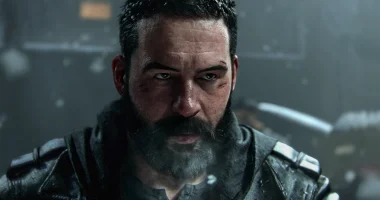
When Ghost of Tsushima launched back in 2020, it set a gold standard for cinematic storytelling within an open-world samurai game. Its focus on atmosphere, culture, and precise swordsmanship made it a near-perfect blend of art and gameplay. Fast forward to 2025, and Sucker Punch has returned with Ghost of Yotei, a spiritual successor that trades golden autumn leaves for endless snowfall. It’s colder, darker, and more introspective—but also far more divisive.
The credits rolled after 40hrs of trekking across Ezo’s multi-region expanse, mastering its combat systems, and peeling back the layers of Atsu’s vengeance-filled narrative. What I found was a story worth telling and a world worth exploring—yet one not without flaws. Sucker Punch has crafted something visually and mechanically superior to Tsushima, but narratively, it’s a bit tangled in its messaging. Despite that, Ghost of Yotei stands as another hallmark in PlayStation’s lineup, showcasing that even amid tonal imbalance, beauty and brutality can coexist.
The Onryo Who Haunts
At the heart of Ghost of Yotei lies Atsu—a survivor from the massacre that of which the Yotei Six laid upon her family. For sixteen years, she lived as a phantom, hunted and hardened by the unforgiving wilderness Kyoto. When the story begins, she’s already an expert survivor but far from a refined warrior. That distinction matters, because Sucker Punch makes her lack of polish part of her identity. Every strike feels driven by willpower rather than technique, and that raw energy becomes her most defining trait. Atsu’s journey is one of vengeance and rediscovery. Her brother, presumed dead, reappears as a samurai—a symbol of everything she’s grown to despise. The conflict between them forms the emotional backbone of the game, and while their relationship is compelling, the writing often undercuts it. The script seems overly determined to portray Atsu as superior to those around her, particularly men, even when the logic behind it falters.
Throughout her journey, Atsu frequently belittles samurai as weak or cowardly, and even when her brother proves his valor, she continues to mock the discipline that defines him. I understand Sucker Punch’s intent—to subvert traditional gender expectations within a historical framework—but it often feels heavy-handed. One particular mission encapsulates this perfectly. Atsu helps rescue a dye maker’s family from a faction of Nine-Tales bandits. Husband, wife, and daughter—all equally trapped, all equally terrified. Yet after saving them, Atsu turns to the husband and remarks, “It was thanks to your wife you were safe.” It’s meant as a nod to resilience, but it feels unnecessary—like the writers wanted to force empowerment where mutual compassion would’ve sufficed. These small moments accumulate, creating an undercurrent that occasionally disconnects me from Atsu’s humanity.
That said, her emotional range is impressive. When she’s not cutting down foes or clashing ideologies, Atsu reflects on her past with quiet melancholy. She visits ruins of her home and performs small rituals that make her pain tangible. This is further emboldened when using the touch pad for paint strokes or even the beginning of the game when she named the Yotei Six on a white sash. It anchors the game in ritual, mirroring how grief becomes action.

Sucker Punch deserves credit for giving her a believable progression through weapon mastery. Each new fighting style is unlocked through multi-part questlines where Atsu must learn from different mentors across Ezo. These quests are some of the best moments in the game, blending lore with mechanical growth. Yet, for all her training, Atsu’s sheer power occasionally breaks the suspension of disbelief. In a grounded historical world, she cuts down entire platoons with minimal effort, which clashes with the otherwise realistic tone. Still, her revenge story is executed with emotion, precision, and cinematic weight.
RAY TRACING at 60FPS!
If there’s one area where Ghost of Yotei achieves perfection, it’s presentation. Running on the PS5 Pro’s Ray Tracing Pro mode, the game’s use of Ray Traced Global Illumination (RTGI) is a site to behold. Sunlight would bounce of surcases and blend into any object with great precision. Sucker Punch clearly built Yotei as both a technical showcase and an emotional one. As you ascend mountain passes, fog drifts dynamically, cloaking enemies in a cinematic haze. Same could be said with the use of GPU-Accelerated Particles with cinders floating off of burned down towns or fallen leaves dispersing as you dash across the field or in the middle of a battle.
Performance remains surprisingly stable, even in chaotic duels or large-scale encounters. The PS5 Pro handles RTGI without notable dips, suggesting deep optimization. The HDR implementation is stellar too—icy blues pop against fiery reds, making every frame worthy of a screenshot. Beyond visuals, sound design ties it all together.
From Stance to Options
Ghost of Yotei is a confident evolution of its predecessor. The stance system that defined Ghost of Tsushima has been completely reimagined. Instead of switching stances to counter weapon types, you now swap between fully realized weapon types. Atsu can seamlessly transition between dual katanas, spears, bows, and the heavy odachi. Each weapon feels distinct—not just in attack patterns, but in rhythm and philosophy. Dual katanas emphasize speed and aggression, while the spear introduces reach and tactical spacing. The odachi hits like a freight train but demands patience and precision. Learning when to switch creates a satisfying flow—an elegant dance of steel that never feels repetitive. This is coupled with the ability to throw dropped weapons to your enemies.
Enemy variety supports this system well. Archers reposition intelligently, shielded foes punish reckless aggression, and elite enemies employ counter-techniques that test timing and adaptability. Combat feels deliberate, with animations that convey weight without sluggishness. Parry timing is tighter, and dodging feels refined. Sucker Punch even added a stamina-based “Resolve” system that encourages strategic pacing, rewarding composure over chaos.
The open world itself feels more reactive. Side content now integrates seamlessly with the main journey, following what I’d call a Rockstar-esque design approach. Instead of icons cluttering the map, opportunities reveal themselves naturally through animation and interaction. A farmer might flag you down while you’re crossing a bridge, leading to a quest that unravels into a multi-hour storyline. Or you might stumble upon a snow-covered battlefield, where investigating fallen soldiers sparks a ghostly vision sequence tied to Atsu’s past. Every discovery feels intentional and cohesive. The game never forces exploration—it invites it. I found myself wandering off to trace animal tracks or follow trails of blood in the snow, each detour offering context and reward.
Sucker Punch even introduces environmental survival mechanics, though lightly implemented. Temperature affects stamina regeneration. Traveling too long without heat forces you to find shelter or build campfires. It’s subtle but grounding, adding a layer of realism that complements the story’s tone.
REVIEW SCORE: 8/10
After my time with Ghost of Yotei, I walked away with mixed emotions—but mostly admiration. It’s a breathtaking achievement in design and artistry, even if its writing occasionally falters under the weight of its message. Atsu is a fascinating character: powerful, vengeful, and flawed in ways that make her memorable, even if not always likable. The technical aspects of Yotei are unmatched on console. The combat system evolves meaningfully, and exploration has never felt more organic in a Sucker Punch title. But for all its beauty and intensity, there’s a tonal imbalance that occasionally breaks immersion—a push to assert strength where empathy could have spoken louder.
Still, Ghost of Yotei stands tall. It’s a story of rage and redemption told through ice and blood. A haunting, visually masterful follow-up that refines the soul of Tsushima while forging its own identity. Atsu’s vengeance may burn cold, but Ghost of Yotei burns bright. It’s a masterclass in technical artistry, combat design, and open-world storytelling, even if its narrative stumbles in nuance. What it gets right outweighs what it doesn’t—and when the snow settles, it leaves behind a legacy worth remembering.
For more on Ghost of Yotei and gaming, follow my socials here – I also stream Mon | Tues | Thurs | Fri @10pm ET over on Twitch, Kick, TikTok, and YouTube