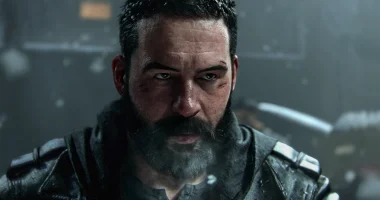
Bloober Team has been on an interesting trajectory over the last few years. Their reputation as a studio was solidified when they were announced to helm the Silent Hill 2 remake, a project many felt was untouchable. I went in skeptical but walked away impressed. The way they treated that property showed restraint, reverence, and an understanding of why it became one of the gold standards in survival horror. That same philosophy bleeds into Cronos: The New Dawn, though this time it’s their own creation. What surprised me is how Cronos doesn’t just live in the shadow of their past work but goes beyond expectation. Its scope is ambitious, its worldbuilding feels vast and layered, and its gameplay respects the very pillars that define this genre. Rather than chasing cinematic flair at the expense of interactivity, Bloober leaned into what makes survival horror thrive: oppressive atmosphere, deliberate pacing, and mechanics that demand awareness of every choice.
Such Is Our Calling
You step into the role of a Traveler—an enigmatic operative whose purpose is to clear the way for those who will follow. Your mission begins with the search for a fallen predecessor, a task that sets you on a journey through a bleak and desolate world. Almost immediately, you’re struck by the retro-futurist aesthetic: remnants of 90s-style high-technology scattered across the ruins of Poland, blending with an unsettling, almost timeless 80’s atmosphere. Your Traveler’s suit evokes both the functionality of a deep-sea submersible and the ornate detail of steampunk design, a fusion that feels both practical and otherworldly. Within the vast helmet your Traveler wears, is a disembodied female voice that echoes within. From there, the game hands you the reins, leaving its mysteries for you to uncover piece by piece. The story of Cronos: The New Dawn hooked me from the start. It doesn’t overwhelm with exposition, nor does it leave the player adrift without direction. Instead, it crafts a slow burn where the world unfolds piece by piece, and the mystery grows heavier with every step. I found myself immersed to the very end, and even after experiencing the True Ending, I kept replaying events in my head trying to stitch the narrative threads together. Yet one element continues to elude me: who exactly are the Collective? Their presence haunts the story, their influence is undeniable, but even after dozens of hours, I was left unsure of their ultimate role. That kind of lingering mystery feels intentional, as though Bloober wanted the player to stew on the implications long after the credits rolled.
What caught me off guard were the dialogue choices sprinkled throughout the campaign. They aren’t earth-shattering in terms of altering the main plot, but the way they add weight to your interactions stood out. Choosing how to respond in tense encounters or when engaging with survivors gave me pause. It added a human dimension to a world already thick with unease. The time-travel element in particular carried the story to unexpected places. Moving through fractured timelines and seeing how events shift because of your actions pulled me deeper into the fiction. That’s when I realized how human extractions occurred; I did not see that coming. These elements, combined with the oppressive setting, created a narrative that felt as unsettling as it was intriguing. It isn’t perfect in clarity, but it’s unforgettable in its execution.
UE5 Woes
Cronos: The New Dawn is a visual showcase, and Unreal Engine 5 flexes its strengths here. The software-based Lumen shadows and global illumination bring an eerie realism to every corridor and ruin. The way light bounces naturally off metal or how shadows crawl across the wall as your flashlight shifts—it all adds to the tension. This is the kind of detail that turns a hallway into a suffocating gauntlet rather than just another environment. I ran the game on my RTX 4090 rig, and at launch, it wasn’t smooth sailing. Traversal stutters plagued my experience, enough to break immersion when I needed it most. Thankfully, a patch arrived within days that resolved the bulk of the performance hitches. The game isn’t flawless even now, but the difference was immediate. The stutters that had been constant during my exploration melted away, leaving me free to appreciate the fidelity Bloober was aiming for.
I’ve never been the type to complain about Unreal Engine 5 simply because it doesn’t hit 240fps with every setting cranked to Cinematic. For me, the sweet spot has always been around 60 to 80fps, as long as the visual fidelity remains uncompromised. Cronos achieves that balance. On my setup, the environments looked pristine without requiring me to sacrifice the atmosphere for raw frames. What impressed me most was the obsessive attention to detail. Bloober’s art team clearly took notes from the likes of Naughty Dog in terms of asset placement and environmental storytelling. Across my playthrough, I struggled to find repeated textures or recycled objects. Every room felt handcrafted, every space designed to serve a purpose beyond filler. It’s a level of detail that elevates immersion and makes exploration rewarding in its own right.
Paying Homage, and That’s It
When it comes to gameplay, Cronos pulls inspiration from the classics but builds its own identity. Many will compare it to Dead Space, and the DNA is clear. The claustrophobic corridors, resource scarcity, and looming dread share the same bloodline. Yet Bloober opted not to replicate the dismemberment mechanic, the telekinesis pull, or the anti-gravity combat sequences. On the surface, that might seem like a missed opportunity, but in practice, it highlights what Cronos values most. The game’s strength lies in its atmosphere, and stripping away the more action-heavy mechanics keeps it grounded. Survival isn’t about domination; it’s about making the decision to fight, flee, or conserve resources. That balance makes every encounter meaningful. Resource management is central to the experience. Ammunition and healing items are precious, forcing you to weigh whether a fight is worth engaging or if it’s better to retreat. The game trusts you to play smart rather than showering you with supplies. On Normal difficulty, I sometimes found the enemy health pools in the early acts overwhelming. It felt like they could soak up far too much damage, breaking the tension with frustration. But once I adjusted my approach—prioritizing evasion and environmental use over brute force—the systems clicked into place.
The environmental puzzles are where Cronos shines brightest in gameplay variety. I encountered debris puzzles that required manipulating warped timelines, platforms that altered gravity in clever ways, and bolt charge connectors that demanded precise timing. Each puzzle felt distinct, integrated into the world rather than pasted on top of it. They broke up the intensity of combat without deflating the atmosphere, and in many cases, solving them was just as tense as surviving a fight. The brilliance of Cronos isn’t in any one mechanic but in how all of its parts serve the greater whole. The combat is punishing yet purposeful, the puzzles are inventive yet grounded, and the world is oppressive yet alluring. Together, they create an atmosphere that rivals some of the best in the genre. It’s a testament to Bloober’s maturation as a developer that they resisted overloading the game with systems and instead leaned into restraint.
REVIEW SCORE: 8.5/10
Cronos: The New Dawn may not reach absolute perfection, but it establishes itself as one of the strongest survival horror releases of recent years. Its narrative lingers long after completion, its visuals are both cutting-edge and immersive, and its gameplay understands that atmosphere is the truest currency of the genre. I came into this expecting a solid follow-up to Bloober’s previous efforts, but what I found was a game that carved out its own place among the gold standards it so clearly respects.
For more on Cronos: The New Dawn and gaming, follow my socials here – I also stream Mon | Tues | Thurs | Fri @10pm ET over on Twitch, Kick, TikTok, and YouTube