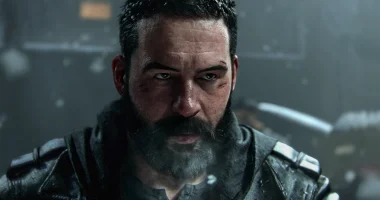

Played on PS5 Pro and ROG Strix Scar 18 w/ RTX 5080
I’ve spent hours exploring the war-torn land of Hadea, and Rogue Factor has delivered an experience that feels rare in today’s landscape. It gave me the same sense of awe I felt with Returnal—a world shrouded in mystery, layered with exploration, and anchored by clever puzzle design. Despite working within an AA budget, the team achieved AAA ambition, crafting a universe that is rich, detailed, and relentlessly immersive. After 35 hours, the conclusion left me wanting more. This is a game I believe every player should experience. The impact came not from bombastic set pieces or endless combat scenarios but from deliberate design. Every corner of Hadea felt like a piece of a larger mystery waiting to be uncovered. The game consistently rewarded curiosity, punishing only those who rushed forward without observation. That commitment to building an experience that trusts players elevated my time with it far beyond expectation.
A World Within a World

Hadea is a land in ruins. Civil war has fractured its people, and the scars of conflict run deeper than the physical wreckage. You step into the role of Rémi, a man searching for truth in the chaos of his homeland. The story is not told in long cutscenes or drawn-out exposition. Instead, it emerges through small fragments: whispered conversations, discarded relics, and cryptic inscriptions. The game pushes you to assemble its truths much like its puzzles—piece by piece. The world-building relies heavily on atmosphere. Abandoned towns echo with silence, temples breathe with history, and underground passageways pulse with tension. The civil war’s impact is always present, from bodies buried under rubble to symbols scrawled across ruined walls. Hadea feels like a real place because its pain is never hidden. Even the supernatural Lymbic entities that wander its landscapes carry emotional weight, manifesting the turmoil of the land in violent, uncanny forms.
The narrative progression reflects this fractured environment. There are moments of profound clarity, but also stretches where meaning remains obscured. That uncertainty fits the setting. War is confusing. Trauma resists neat explanations. Rogue Factor allows the story to breathe within that space, never rushing to satisfy curiosity too quickly. It is the kind of storytelling that asks more of the player, but in return gives a deeper connection to the world.
More than a Soulslike
The core combat system borrows heavily from “soulslike” traditions while layering in its own personality. Weapons forged with Lymbic energy define your approach—swords, axes, polearms, and greatswords. Each weapon carries distinct emotional affinities, affecting both damage output and the flow of battle. Glyphs allow you to slot abilities that expand your tactical options, while a drone companion provides both combat support and puzzle interaction. The healing pulse system replaces traditional flasks by rewarding offensive momentum, reinforcing the idea that survival comes from measured aggression rather than cautious retreat.
What stood out to me most was the design philosophy. Exploration and story come first. Combat comes second. Battles are tense, yes, but they are not the main attraction. The real challenge is decoding the world and following clues to progression. Puzzles often ask you to interpret scattered evidence without explicit guidance. Landmarks serve as beacons for direction, but they are never labeled or highlighted. Success demands patience, observation, and careful note-taking. The combat itself is satisfying yet imperfect. The lack of a standard heavy attack left gaps in the flow of encounters. Only having access to a charged heavy strike disrupted momentum when I wanted something more immediate. Enemy variety among the Lymbic entities also felt limited. While the designs themselves are unsettling, I longed for more distinct archetypes—flying adversaries, heavier brutes, or stealth-oriented foes that could diversify engagements. These shortcomings never ruined the experience, but they did stand out across dozens of hours of play.
Despite these issues, the combat and progression systems remain rewarding. Lymbic abilities combined with drone mechanics created opportunities for experimentation. Timing a drone-assisted dash to pierce through enemies or deploying glyphs at the perfect moment made battles feel cinematic. The synergy of tools in your arsenal provided depth, even if the roster of threats lacked diversity.
The Presentation of a AAAA Game
Presentation defines Hell Is Us just as much as its mechanics. Playing on a custom PC with an RTX 4090 and on the ROG Strix Scar 18 gaming laptop, the game ran flawlessly at Ultra settings with DLSS set to Quality. Lighting cut through shattered windows in shafts of pale brilliance. Rain clung to stone walls with ray-traced-esque shadows and lighting that added weight to every environment. Particle effects during combat filled the screen with bursts of color that felt like emotions breaking free. On the PlayStation 5 Pro, Quality Mode preserved much of this fidelity, offering consistent performance and detail that held the atmosphere intact. Best of all, having HDR enabled didn’t impact my performance because I was playing this with a HDR10+ Gaming monitor, which gave me the same level of color depth you’d expect while maintaining input latency to the absolute minimum. The theme of decay and conflict is visible in every texture. Collapsed buildings do not look generic—they look lived in, broken by history. Religious structures carved into caverns radiate both reverence and despair. Forest paths choked with fog evoke mystery rather than mere decoration. Rogue Factor used their budget wisely, focusing on scope and detail where it mattered most. The game was not developed with AAA funds, but boy, I can’t fathom what they could do if they did because Hell is Us competes with the best of them.
Attention to detail elevates the presentation further. Sound design layers whispers, creaks, and distant roars into a soundscape that constantly unsettles. Music blends with environmental cues, often fading into silence at the perfect moment. Animations carry weight, from the swing of a weapon to the stagger of a wounded enemy. These elements combine to create immersion that is rarely broken.
REVIEW SCORE: 8.5/10
The world-building is exceptional. Exploration and detective-style progression keep players engaged. Combat delivers impact but leaves room for improvement in enemy diversity and attack flow. Presentation achieves remarkable quality on both high-end PC hardware and the PlayStation 5 Pro. Hell Is Us is bold, haunting, and confident in its design. It trusts players to discover its story rather than spoon-feeding answers. It prioritizes exploration and atmosphere over constant action. It is a game that asks patience and focus but rewards both with one of the most immersive worlds of the year.
I hope a sequel expands the Lymbic roster with new archetypes, adds flexibility to combat through smoother heavy attacks, and sharpens the pacing of its final act. The foundation is here for something extraordinary. With refinement, Rogue Factor could surpass expectations and establish a franchise that stands alongside the greats.
For more on Hell is Us and gaming, follow my socials here – I also stream Mon | Tues | Thurs | Fri @10pm ET over on Twitch, Kick, TikTok, and YouTube