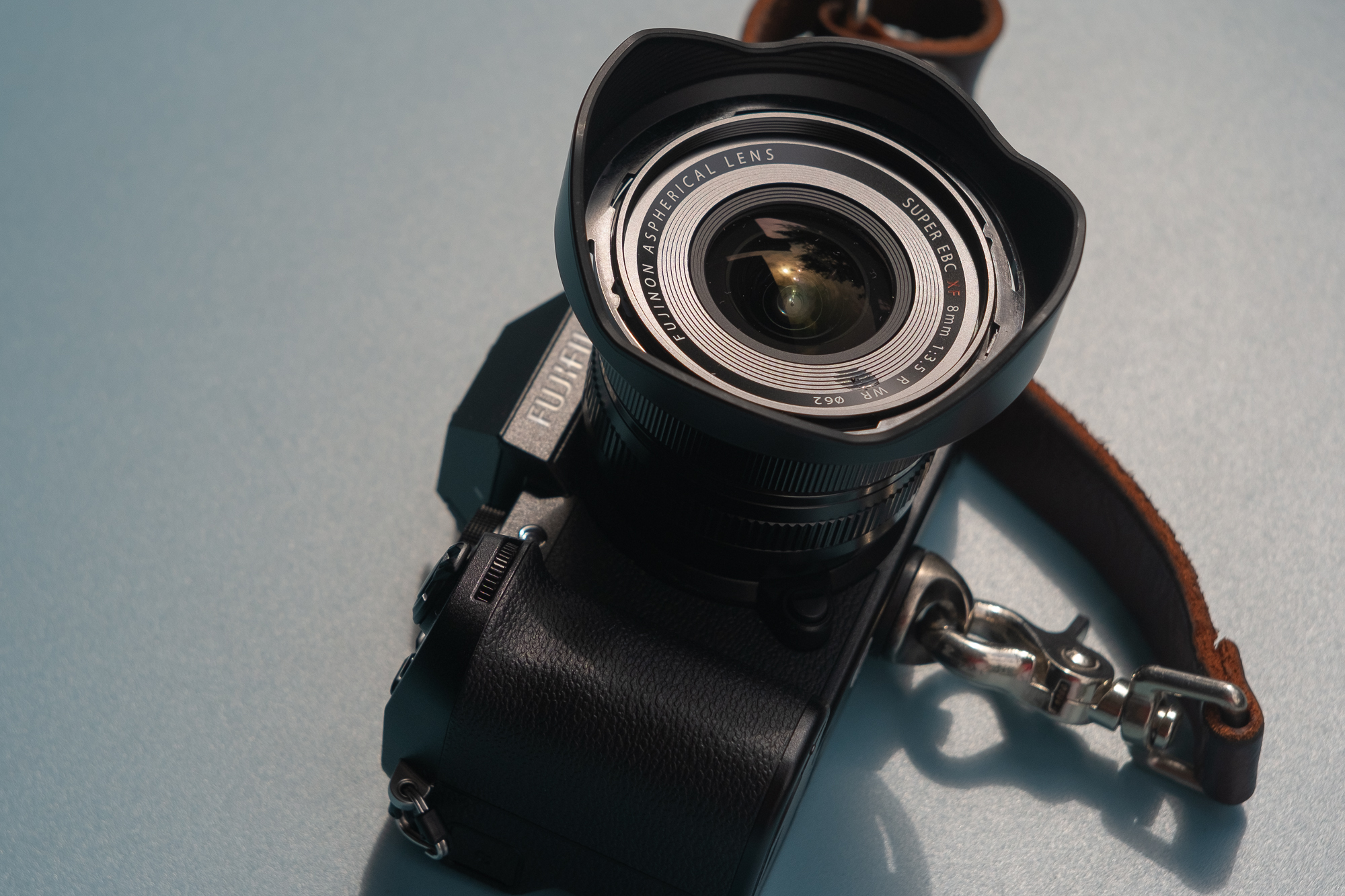

The Fujifilm X-S20 is something of an anomaly – it’s a newly released camera that combines the image processor from the X-H2 with the older sensor found in the X-T4. It loses out on the megapixel-dense sensors (26-megapixels vs. 40-megapixels), but boasts improved AF capabilities including Eye, Pet, Vehicle, etc. Autofocusing capabilities. All in all, the X-S20 is trying to court a particular type of user – those looking to make video content for social networks first; but does it hit the right marks?
Fujifilm X-S20 Key Features
- 26.1-megapixel APS-C X-Trans 4 CMOS Sensor
- X-Processor 5 image processor
- Subject Detection AF including Insect and Drone modes – new to the X-Series cameras – even in AF-C mode.
- AUTO mode with AUTO Subject Detection – allowing for automatic detection and tracking of your subject.
- 19 Film Simulation modes
- Video Specs: 6.2k/30P 4:2:2 10-bit video internally and supports up to 12-bit ProRES RAW/Blackmagic RAW with an external capture device.
- Webcam Support via USB-C or direct OBS support – allowing for 4k/60P direct to live stream.
- F-Log 2, allowing for up to 13 stops of dynamic range.
- 3.5mm headphone and mic jacks
Ergonomics & Design
While the physical changes to the X-S20 compared to its predecessor, the X-S10, are minimal, the ones that matter are huge. Namely, the ergonomics of the X-S20 improves on the X-S10 – especially at the grip. Where the X-S10 did a good job providing the user with a secure hand on the camera, the X-S20 makes it feel solid and stable. This matters, especially if you plan on using any kind of long lens. During my review period, I paired the X-S20 with my Tamron 17-55mm f/2.8 (a great lens btw). The slight changes to the camera’s body design made the pair balanced and comfortable. So much so, I shot a Brooklyn Cyclones game without needing to swap lenses.
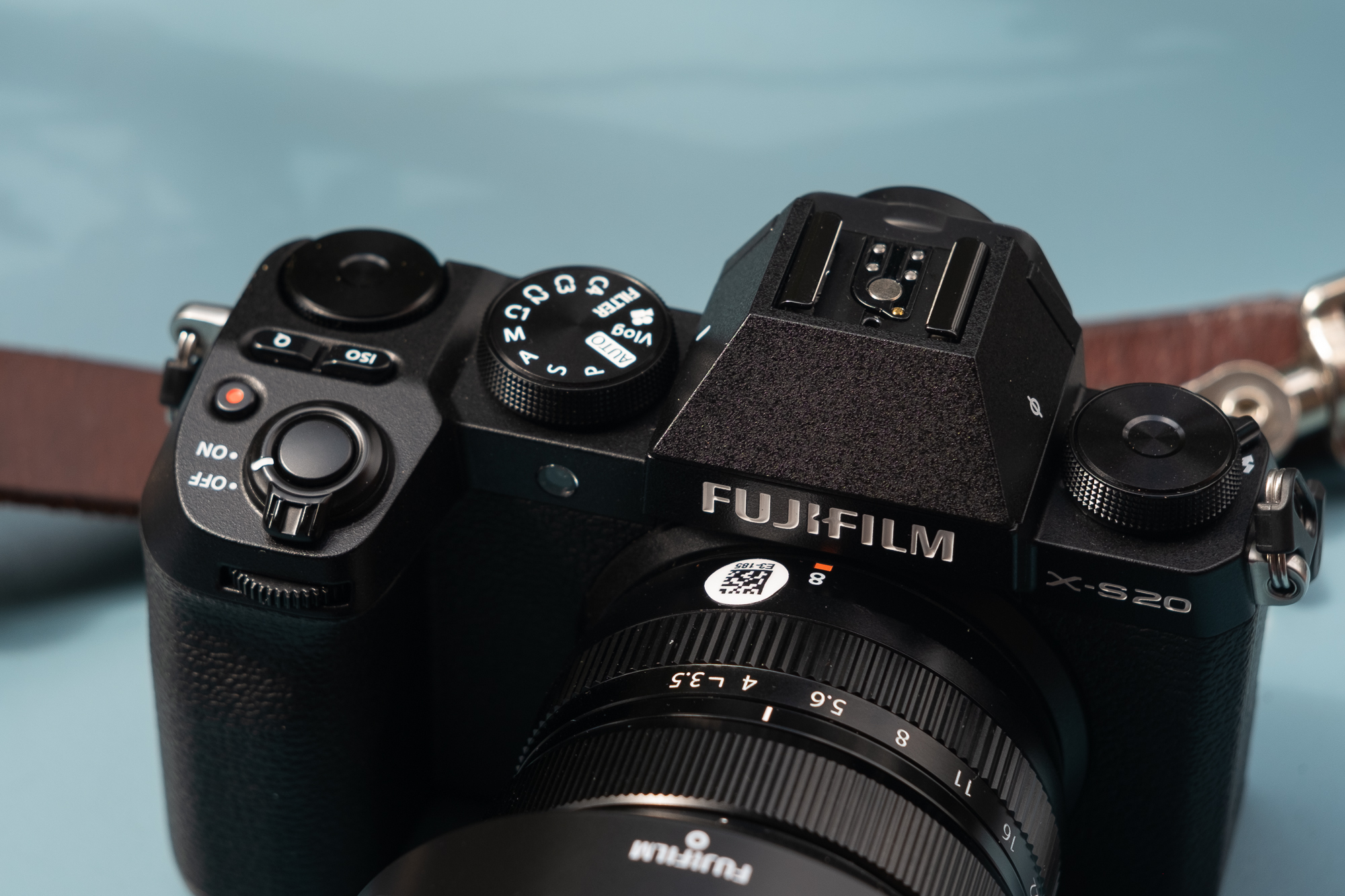
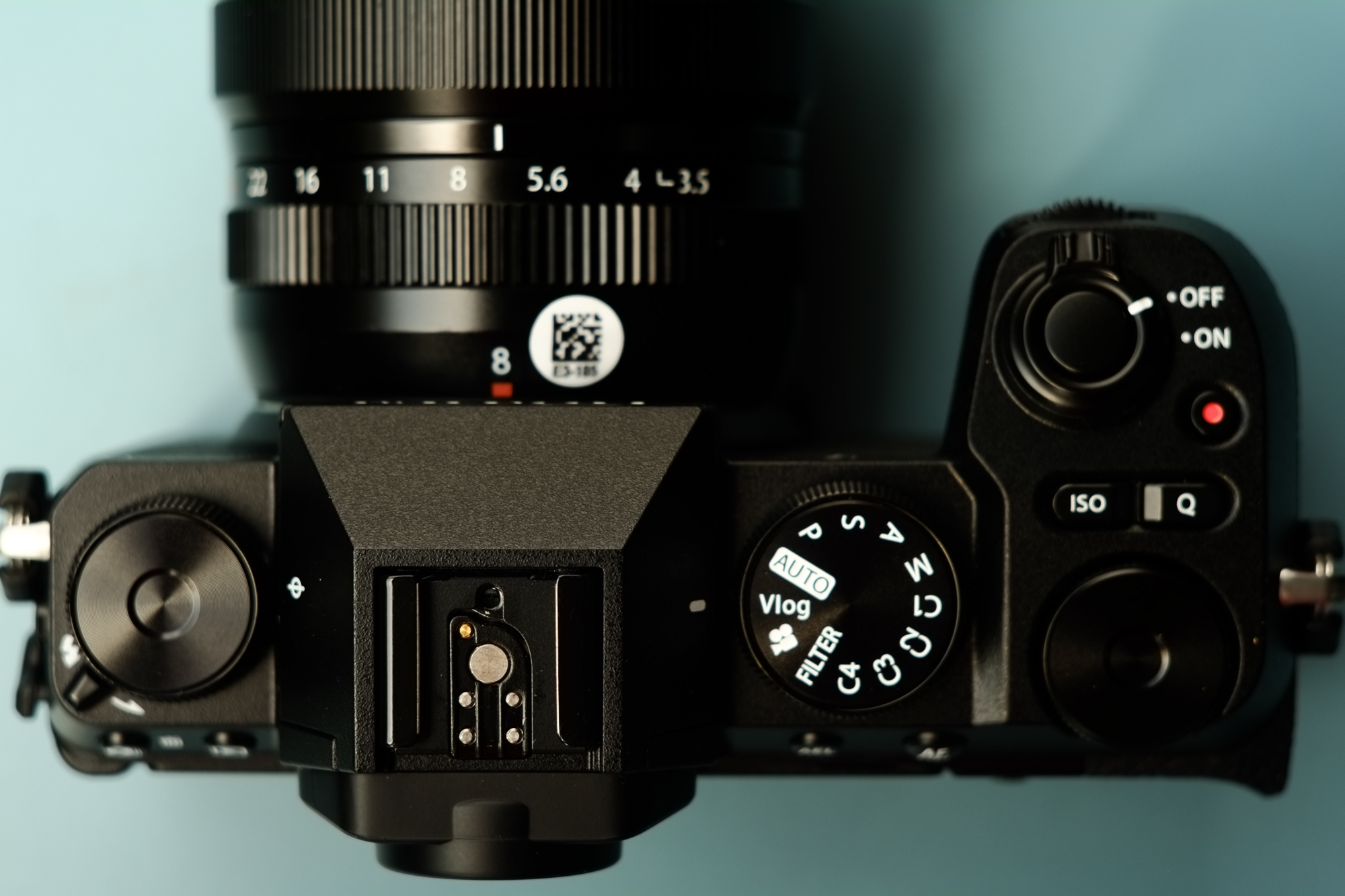
Unlike the more photo-centric bodies, like the X-T5 or X-Pro series, the X-S20 adopts the more modern DSLR look and feel of the X-S10. Gone are the tactile dials for shutter and ISO controls and in their place you’ll find a PASM dial on the right and a customizable dial to the left. It feels solid in the hand in a way that the X-S10 didn’t but as a personal preference, I could not get used to not having the shutter and exposure controls as tactile dials.
Everyday use and handling

I was fortunate to get three solid weeks with the FUJIFILM X-S20, in that time I got a feel for the camera as a stills-camera companion and as a primary video camera. To be fully transparent, I do not vlog and my video creation chops are intermediate at best. But that didn’t stop me from picking up the camera and giving it a shot. The PASM dial harkens to today’s standard mode dial look and feel; as a Fujifilm photographer who prefers the vintage control dial, this resulted in me accidentally changing modes instead of adjusting the shutter speed. It’s a bit picky on my part but there is something of an adjustment period that I went through.
Despite some of those muscle-memory difficulties, overall shooting with the X-S20 is largely a breeze. Paired with the XF 8mm F2.8 WR, it’s nearly impossible to miss focus, even wide open. That’s the beauty of making photographs with this combination – whether you’re capturing day-in-the-life style vlogging videos or packing the full environment of your locations, the X-S20 and XF 8mm F2.8 shine as a solid option to take on all your adventures.

Unfortunately, things got spottier when paired with my Tamron 17-70mm and using the X-S20’s autofocusing features. When shooting a Brooklyn Cyclones game, I found that the autofocusing often had trouble distinguishing the subject between the foul ball netting and the action on the field. Shooting portraits, especially of people of color, the X-S20 would often “hunt” for the eye vs. on fairer-skinned tones.
Do I Buy an X-S10 or an X-S20?
When looking at the X-S20 you can’t help but wonder if it’s worth the price bump over the X-S10. For starters, they share the same sensor, and yet the X-S20 is priced at $200 more than its predecessor. This ultimately comes down to a few things about who’s buying this camera. First, do you currently own an X-S10? If the answer here is yes, then there’s little reason to upgrade unless you’re looking to turn the X-S10 into your B-camera. If you do not need an additional camera body (i.e., you’re not making money from your gear and just use it as a hobbyist) then the answer is simply that you don’t need to upgrade.

Second, if you are either a videographer or content creator, are the additional AF modes worth it to you? How often are you shooting animals, bikes, cars, and planes? As my photography career has changed, I’ve largely started looking at needs vs. wants – specifically, I’m no longer consistently shooting events and I don’t shoot wildlife I very rarely need the latest and greatest camera gear. As a street photographer (hobby) and portraitist (paid) my gear choices reflect what I shoot most and what I need for each job (an APS-C camera for street and a Full-Frame for portraits). That being said, there’s a significant bump up in eye and face autofocusing capabilities in the X-S20 that translates to more consistent keepers when making still photographs and improved in/out-of-focus transitions (think product shots) for video.
Lastly, if you stumbled upon this article because you’re looking to buy your first “serious” camera and are trying to determine if you need the updated X-S20 or if you should save the money by going with the X-S10 – I’m going to write something a little contradictory to many of my previous articles: spend a little more. While I initially wrote that if you currently own the X-S10 you don’t necessarily need to upgrade to the X-S20, if you’re just jumping into the X-mount system then spend a little more and take advantage of the better image processor. In the long run, it will make more sense as you truly begin to experiment with the capabilities of the camera and provide you enough ceiling to grow with your gear. A cheaper option is only cheaper if you don’t find yourself in need of an immediate upgrade.
Sample Images

Fujifilm X-S20 and Tamron 17-70mm 
Fujifilm X-S20 and Tamron 17-70mm 
Fujifilm X-S20 and Tamron 17-70mm 
The X-S20 and XF8mm F3.5 WR (Clothing Drive Event) 
The X-S20 and XF8mm F3.5 WR (Clothing Drive Event) 
The X-S20 and XF8mm F3.5 WR (Clothing Drive Event) 
The X-S20 and XF8mm F3.5 WR (Clothing Drive Event) 
Fujifilm X-S20 and XF8mm F3.5 
Fujifilm X-S20 and XF8mm F3.5 
Fujifilm X-S20 and XF8mm F3.5 
Fujifilm X-S20 and XF8mm F3.5 
Fujifilm X-S20 and XF8mm F3.5 
Fujifilm X-S20 and XF8mm F3.5
Closing thoughts on the X-S20
Fujifilm continues to make some great cameras for visual creators of all stripes. The Fujifilm X-S20 is an entry way into the X-H line of cameras that are purpose-built for video creators. If you’re ultimately hoping to upgrade to an X-H2S or simply want those Fujifilm simulations with a PASM dial, the X-S20 very easily can make that a reality. The X-S20’s Vlog mode helps take some of the guesswork out of getting your talking-head and vlog-style video shots and the improved autofocusing capabilities will help photographers get more of what they’re looking for in sharp focus with fewer misses. That said there’s still a lot more I’d like to see from ALL camera manufacturers in terms of better detection of darker-skinned people. This has been a pain point when shooting with the X-S20, but the improvement here is refreshing. As a person of color and photographer, I’m still looking for improvements in this arena – I’m just happy to see that Fujifilm is working on it.
You can purchase the Fujifilm X-S20 on Amazon for $1299 without a lens and $1699 as a bundle.

