

I’ve been there since the beginning—the original DOOM in all its pixelated, demon-slaying glory on my family PC. I grew up with the franchise, felt its adrenaline-pumping heartbeat in every iteration, and when DOOM (2016) redefined what this franchise can evolve into, I was in awe. Then came DOOM Eternal, a ballet of brutality I hoped for, and thoroughly enjoyed. Naturally, when DOOM: The Dark Ages was announced, my curiosity was piqued. A prequel? In a sci-fi medieval setting? I already trust id Software – so I had faith in their project, and thankfully they managed to maintain their gory momentum in great fashion!
Origins Woven in Blood and Betrayal
If DOOM Eternal was the rock opera of the Slayer’s modern-day carnage, The Dark Ages is his grim, mythological origin story. The narrative thrust here is surprisingly substantial, fleshing out a legend we only glimpsed in echoes before. Set in the techno-medieval world of Argent D’Nur, this prequel follows the Slayer’s transformation from a bound servant of the Maykrs to a wrathful force of divine vengeance. We see the Slayer not as an unrelenting juggernaut from the start, but as a warrior shackled by the Tether, used as a blunt instrument by celestial manipulators. There’s political betrayal, religious zealotry, and a surprisingly emotional core surrounding Commander Thira, whose fate intertwines closely with the Slayer’s own rebirth. Make no mistake—the narrative doesn’t bog down the action. It enhances it. Each cinematic serves to make your next act of carnage feel earned,
Running on the latest iteration of the id Tech engine, DOOM: The Dark Ages is, in a word, ferocious. From a technical standpoint, this is id Software operating at near-peak efficiency. Even on my RTX 4090-powered rig I tested on, the game maintained blistering frame rates well above 100fps in 5K (I have a 32:9 5120×1440 monitor), with only just minor DLSS adjustments. Textures are sharp. Lighting is gothic and moody, enhancing the cathedral-sized environments of Argent D’Nur. Reflections glint off bloodied armor, and particle effects from spell-slinging demons pop against the grim backdrop. The visual design screams dark fantasy yet keeps DOOM’s signature industrial sci-fi undercurrent. My only gripe is the flashing indicators, I think it’s too noisy this time around. What really sells the visual package, though, is how consistent it all feels. From grand citadels to cursed forests to demon-choked battlefields, the world-building is cohesive and immersive. And no loading screens interrupt your carnage.
A New Voice for DOOM’s Fury
Mick Gordon is no longer behind the music. And for longtime fans like me, that absence is felt. Gordon’s blistering, industrial-metal soundscapes were more than just music—they were anthems of annihilation, setting a pulse to every headshot and chainsaw rip. That said, the new composer—while taking a noticeably different direction—doesn’t disappoint. The score in The Dark Ages trades some of Gordon’s raw distortion for a more orchestral-meets-black-metal vibe, leaning heavier into Gregorian chants, deep brass, and guttural choirs that echo through ruined cathedrals and demon-infested crypts. It’s still DOOM, but this time with a broadsword instead of a buzzsaw. Combat still feels like music. I’ll admit—I missed the iconic Gordon “drop” moments. Those sudden explosions of bass and chaos that felt like Hell itself was moshing behind your monitor. But what we get here is more atmospheric, more brooding. It elevates the myth, even if it doesn’t always push the BPM.
Where DOOM: Eternal was an acrobatic feast, contrast in The Dark Ages much heavier pace; here, the Slayer is grounded—not slower. More deliberate. And honestly? I loved the change. The combat loop is still signature DOOM: kill fast, kill creatively, and never stop moving. But The Dark Ages introduces a shield-based parry mechanic that is equal parts stylish and functional. The Shield Saw, your new best friend, can slice through demons with a satisfying hum, and also be thrown and recalled with Thor-like flair. Weapons feel weighty, devastating, and somehow even more savage. The Flailgun is absurdly fun, delivering medieval punishment with a modern payload. Melee combat gets elevated thanks to perfect parries that open enemies for Glory Kills even more cinematic than before. There’s an actual rhythm to combat again, but this time it feels more grounded, more methodical. The enemy variety complements this slower pace. Shield-bearing brutes, flying hell-priests, and swarming imps require more than just twitch reflexes. You have to think—prioritize, plan, and sometimes even retreat. It’s a dance, but it’s danced on a killing floor. All of this will be utilized in a much more open environment – meaning, you will enter missions in zones rather than the traditional linear levels with some hidden paths. All of that is still its core identity, but in broad strokes. The vistas are outstanding to boot.
A Bloody Crown for a King Reborn
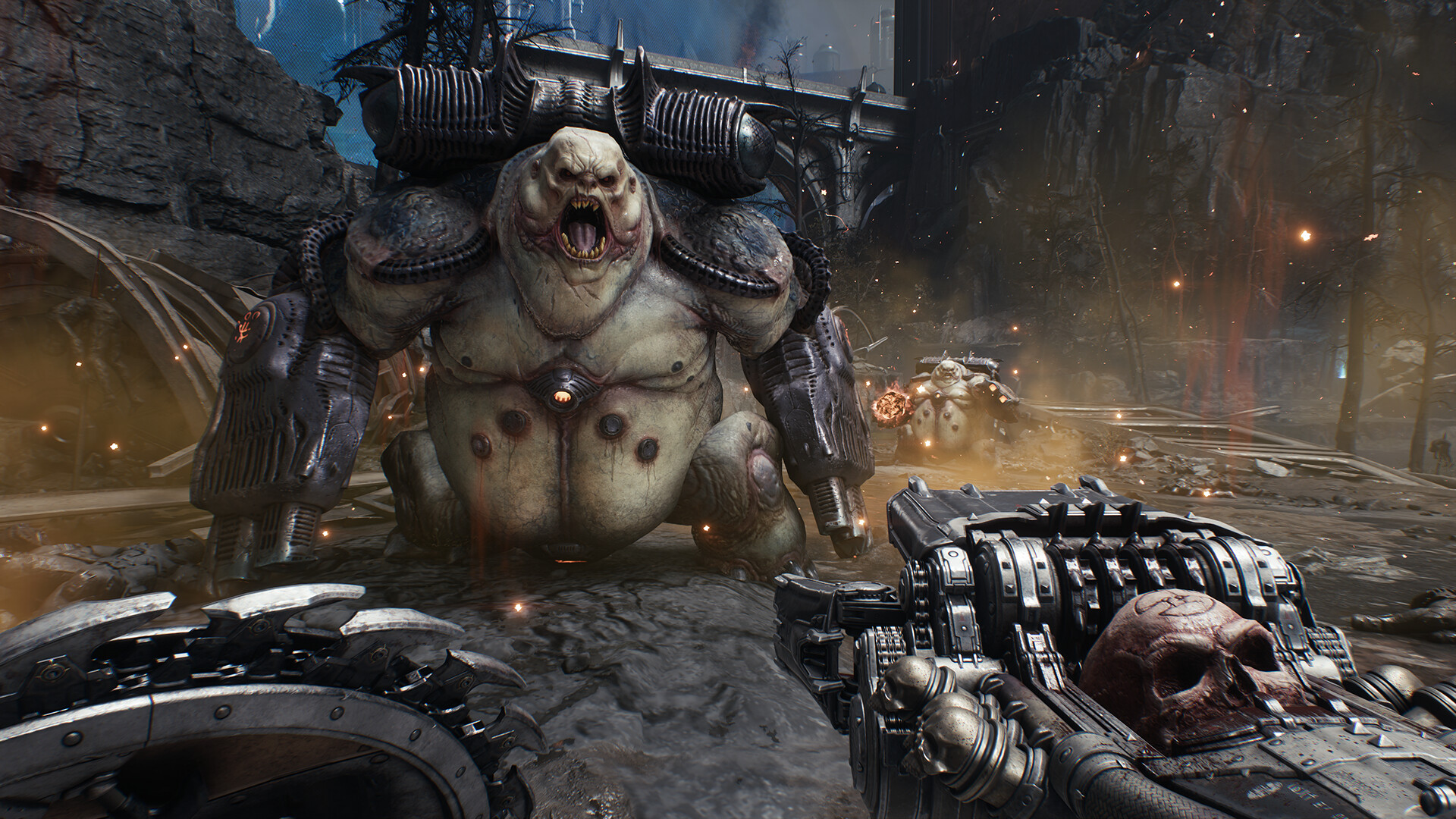
What impressed me most about DOOM: The Dark Ages wasn’t just its brutality or visuals—both of which are fantastic—but its ability to reimagine the franchise’s DNA without losing what makes DOOM… DOOM. This is a game that doesn’t just revel in carnage. It contextualizes it. It gives it mythos, meaning, and momentum. It made me care about the Slayer in a new way, not just as an avatar of vengeance, but as a symbol of defiance against godlike control. Would I have liked more traversal variety? Sure. Do I miss the double-jump and dash now and then? Maybe. And yes, part of me still yearns for Mick Gordon’s electric wrath. But the changes made here are purposeful, not limiting. They match the tone, the lore, the very texture of this world. And the end result is a DOOM game that feels both ancient and evolved.
REVIEW SCORE: 8.5/10
DOOM: The Dark Ages isn’t just a worthy prequel. It’s a statement. A declaration that even in the past, the Slayer was always the future of first-person shooters. For more on DOOM and gaming, follow my socials here – I also stream Mon | Tues | Thurs | Fri @10pm ET over on Twitch, Tiktok and Youtube.

